Training Command
Telling the story of World War II trainers
by Sam Oleson
Sport Aviation, November 2025, pp 70-77.
Photography by Dave Witty and Sam Sasin
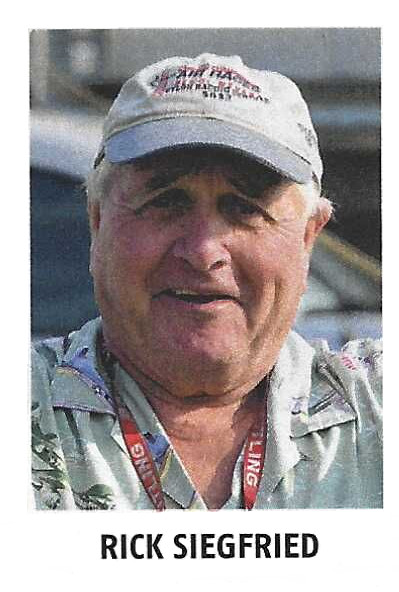
Years ago, Rick Siegfried, EAA Lifetime 12484, noticed that a prime location in the Warbirds area at EAA AirVenture Oshkosh wasn’t really being used for anything. Located behind the Warbirds in Review area, this patch of grass was right next to a ton of foot traffic but had no real purpose. He decided to give it one. Thus, the Training Command area within Warbirds was born.
“We have different theme airplanes that we know are coming in, and we rotate them in and we make it kind of special,” Rick said. “There was this little piece of grass here that was underutilized. And, so, I kind of came up with the idea. I mean, people can go out and they can see the liaison airplanes and they can go out and see the trainers, but we’re not really using this space right now for anything. So, let’s feature Training Command airplanes. I use that [term] loosely because I have other stuff in here, too. So, every year I try to come up with, okay, what significant airplane might be at Oshkosh this year? And how can we utilize it? And let’s create an area to display those airplanes and build a story around it.”
Rick, a longtime T-6 pilot, EAA Warbirds of America board member, and former Warbirds president, noted that through the years Training Command has focused on different eras of history. The area has featured T-28s, T-34s, T-6s, L-5s, L-19s, and various other aircraft. In 2024, it focused on primary trainers and the competition in the late 1930s and early 1940s to supply those aircraft to the U.S. Army Air Corps, U.S. Navy, Royal Air Force, and other British Commonwealth nations at the start of World War II. This past summer, the Women Airforce Service Pilots (WASP) program was the focal point.
When war began in Europe in 1939, the United States was woefully unprepared from an aviation standpoint, both in pilots and aircraft, if it were to be drawn into the conflict. While the United States didn’t enter the fray until 1941, it was preparing itself for that inevitability. By the summer of 1940, with the Battle of Britain raging, President Franklin D. Roosevelt called for the production of 50,000 airplanes, and the War Department and Army
Air Corps continued to ramp up plans for the amount of pilots and aircraft they’d need.
A 1939 program plan required 1,200 pilot graduates a year. By 1940, this plan had increased to 7,000 pilots per year. With this plan came $106 million for new facilities and aircraft, including 800 primary trainers, 800 basic trainers, and 600 advanced trainers. By the time this updated plan was being sorted out in May 1940, German forces were already rolling through the Low Countries and into France. The program was then further revised into the First Aviation Objective, which called for 12,000 pilots a year. As part of this program and its lofty pilot goals, primary training would be completed at 28 civilian pilot schools, seven basic Air Corps schools, and 11 advanced Air Corps schools.
By 1941, the War Department increased its goals even further with the Second Aviation Objective, which called for 30,000 pilots per year, a number derived from the aircraft manufacturing capacity at the time, which was at 36,500 aircraft per year. When Japan attacked Pearl Harbor on December 7, this program was in effect, though discussions were already being had about raising the number to 50,000 pilots per year by mid-1942. Over the course of WWII, the conservative estimate is that more than 250,000 cadets graduated from pilot, navigator, and specialized training programs, according to Dr. Bruce Ashcroft, historian for the Air Force Air Education and Training Command.
Meanwhile, the WASP was formed in 1943 to help free up male pilots for combat roles, preceded by the Women’s Flying Training Detachment and Women’s Auxiliary Ferrying Squadron. Missions for the WASP included aircraft ferrying, target towing, strafing simulations, and cargo transportation, among others. Just over 1,000 women completed WASP training before it was dissolved in late 1944.
Highlighted by a pair of ultra-rare biplanes brought by the Western Antique Aeroplane & Automobile Museum (WAAAM) out of Hood River, Oregon, in 2024, here’s a look at some of the aircraft that have populated the Training Command area the past couple of summers.
2024
St. Louis Ypt-15 and Stearman Model 70
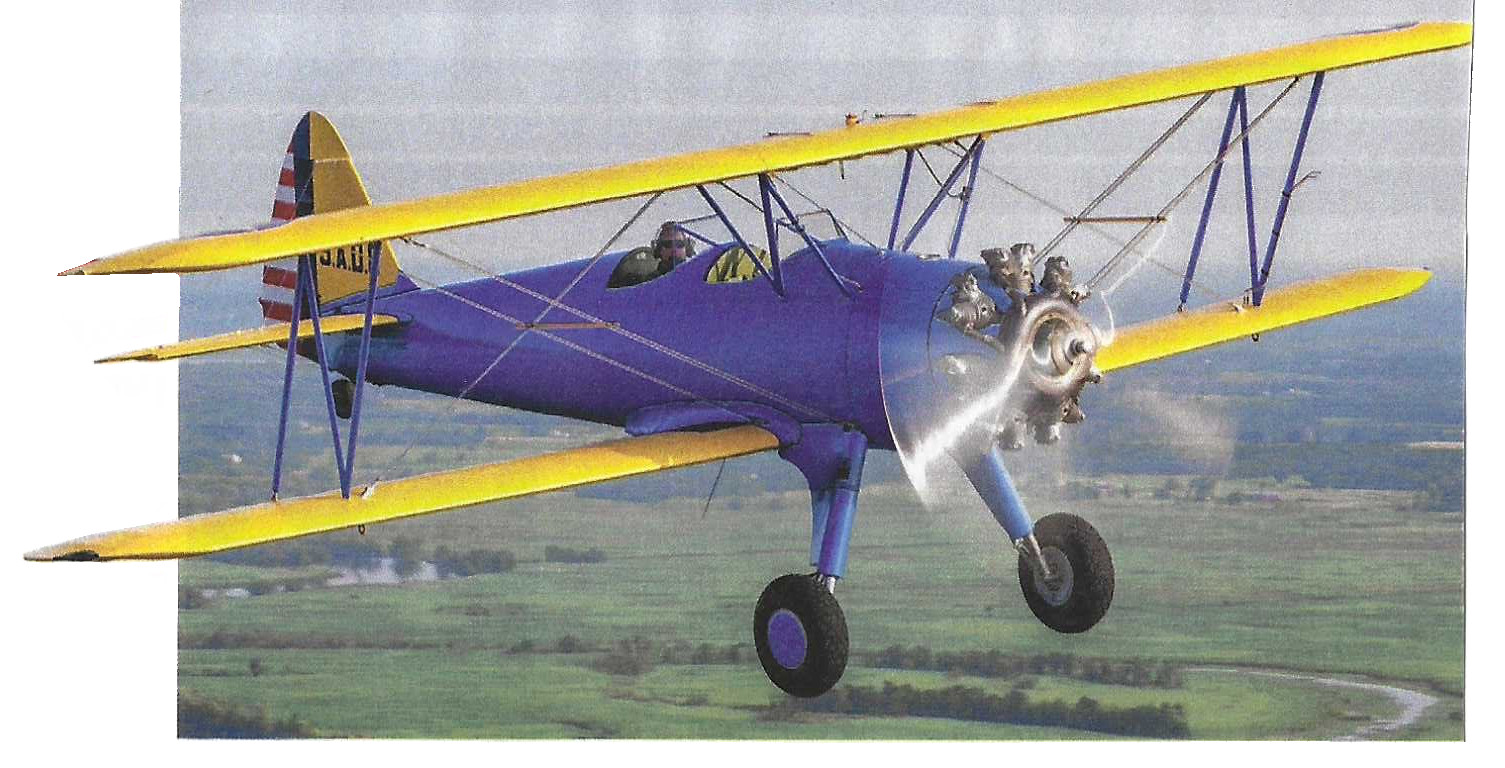
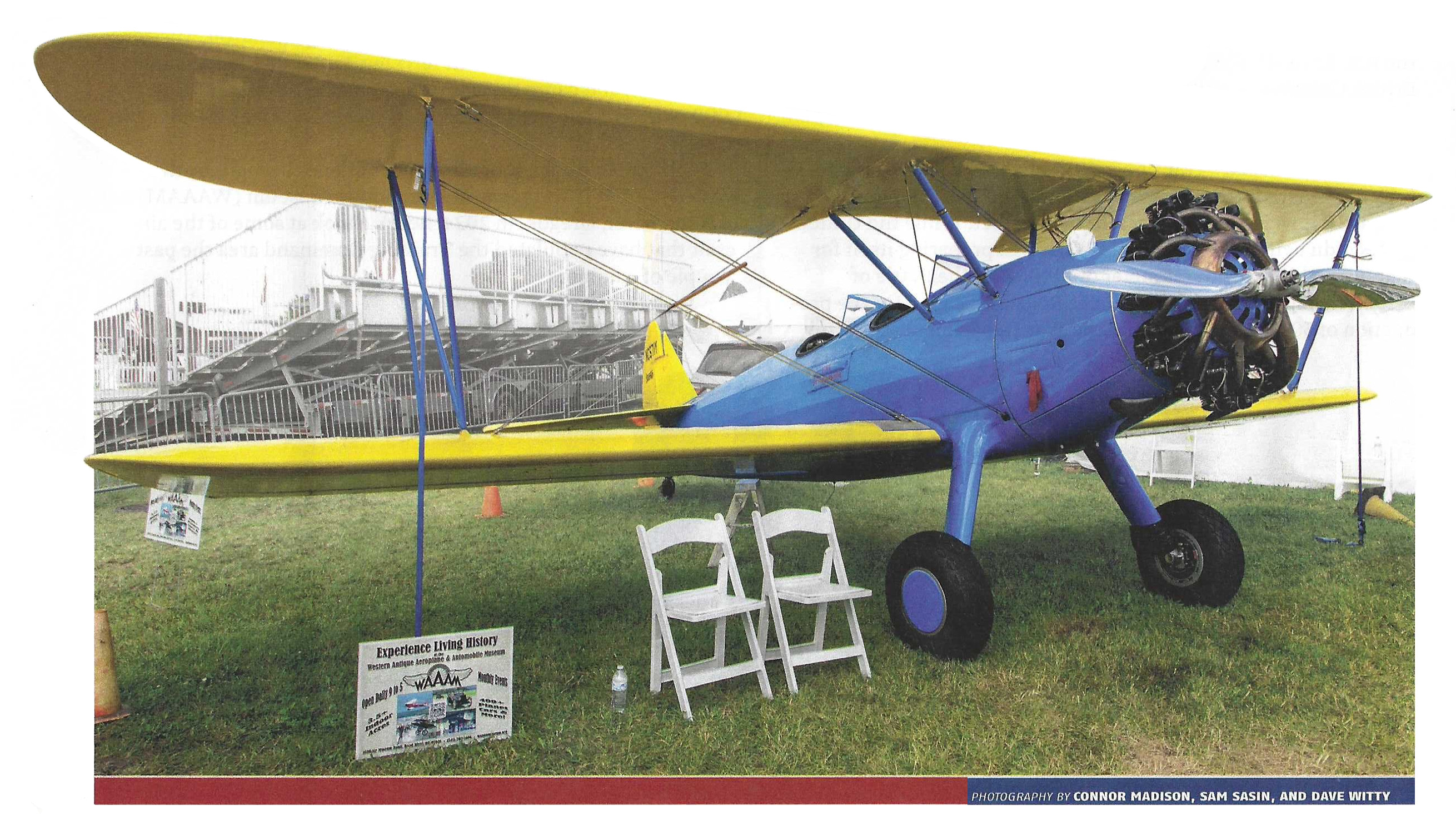
Owned by WAAAM and flown to Oshkosh all the way from Oregon, the St. Louis YPT-15 and Stearman Model 70 in attendance at AirVenture 2024 were an incredible sight to see for fans of WWII trainers.
The YPT-15 is a little-known biplane trainer produced by the St. Louis Aircraft Corp. during the late 1930s for U.S. Army Air Corps use. Only 14 airplanes were ever built, and the one in WAAAM’s possession is the only one known to be airworthy. The YPT in WAAAWM’s possession was built in 1940 and was recently restored at the museum’s facility in the Beaver State.
WAAAM Chief Pilot Robin Reid, EAA 99931, performed the first flight on the airplane a few years ago after its restoration. Having flown nearly 400 different types over the course of his lengthy aviation career, Robin was impressed with the YPT-15’s performance.
“The Stearman is a great trainer, but it’s kind of heavy on the controls. But it does what it was intended to do,” he said. “So, when I did that first test flight on the Streetcar, I was figuring, ‘Okay, we will test-fly it. We’ll let some of the other guys fly it a little bit, and then it’ll kind of go back into the museum.”
However, it quickly became a favorite.
“As soon as the oleo is extended on takeoff, it just gave me this wonderful feel,” he said. “You’re like, ‘Wow, this is a really nice airplane’ It’s just perfectly balanced on the controls. It’s still a two-aileron biplane, but it
was in that early control inputs. It’s just very nimble and very well-balanced. And it’s like, ‘Wow, this is nice’ So, of course, when I got back on the ground, Hayden Newhouse, who was one of our volunteers—he flies a lot of antique airplanes. [I was] like, ‘Hayden, you got to fly this thing. You’re going to absolutely love it. This thing is great.' So, it ended up kind of becoming one of our favorites of that series of airplanes. Stearman flies nice, but the YPT-15 is just perfectly balanced.”
Read more about WAAAM’s YPT-15 in the July 2025 issue of EAA Sport Aviation magazine.
Meanwhile, WAAAM’s 1933 Stearman Model 70 is the one and only prototype of the Stearman Model 75 Kaydet. From initial concept to first flight, the design of the Model 70 took just two months, blending characteristics of the Boeing 203 and Stearman Model 6 Cloudboy. Initially, the USAAC considered the airplane’s stall qualities as being too gentle for a trainer, so it modified the upper wing, which went into the production Model 75 units.
WAAAM acquired NC571Y in 2008 and restored it to airworthy status over the course of about eight years.
Robin’s son Scooter flew the Model 70 to Oshkosh and said it flies better than the production Model 75, in his experience.
“This one [has] just very, very gentle stall,” Scooter said. “It’s really nice. I’ve just had a ball with it. I think it’s just a pleasure to fly. It’s very sweet. It feels a little lighter [than a Model 75]. It feels just a little lighter. No two parts are the same. There’s no parts similarity at all. I mean, the fuselage is a little taller and a little narrower. The way it sits, you can see a little better on the runway; it’s just a little different. The tail, I think, was slightly modified. I think this has the updated tail. Because you can see that rib there. They updated this one and did some more flight testing with it. You can see that vertical rib on the rudder. Visibility out of this is better than out of the Streetcar.”
Interestingly enough, Robin pointed out that the YPT-15 also flies better than a Model 75 Stearman, which was also expressed in the signage they had for the airplanes at Oshkosh.
“We have charts that say under the YPT-15, ‘The loser’ and then ‘The winner?’ because the Streetcar flies beautiful, though it lands a little tougher on pavement than the Stearman,” Robin said. “This
is a little easier to fly than a [Model] 75 Stearman. It’s a little flatter, and it’s got a little more stability because of the dihedral.”
So, if the YPT-15 flies better than the Stearman, why did the Army Air Forces choose the latter? Robin isn’t quite sure, but he’s got some guesses.
“We don’t know,” Robin said. “The best we can piece together is mixed politics, and also that one is all aluminum. Everything’s aluminum. Aluminum wings, ribs, spars, tail, extruders, fuselage is all aluminum. This is a more traditional steel tube, wood wings, so we think that this one is much lighter on strategic materials.... Our best guess is that that one took so many strategic materials and it’s a little harder to work on than this [Stearman], so they’re more comfortable with the traditional construction.... But according to a letter from the test pilot of that one [YPT-15], he said there is no reason that they didn’t do it other than politics. So, the test pilot thought it was all politics.”
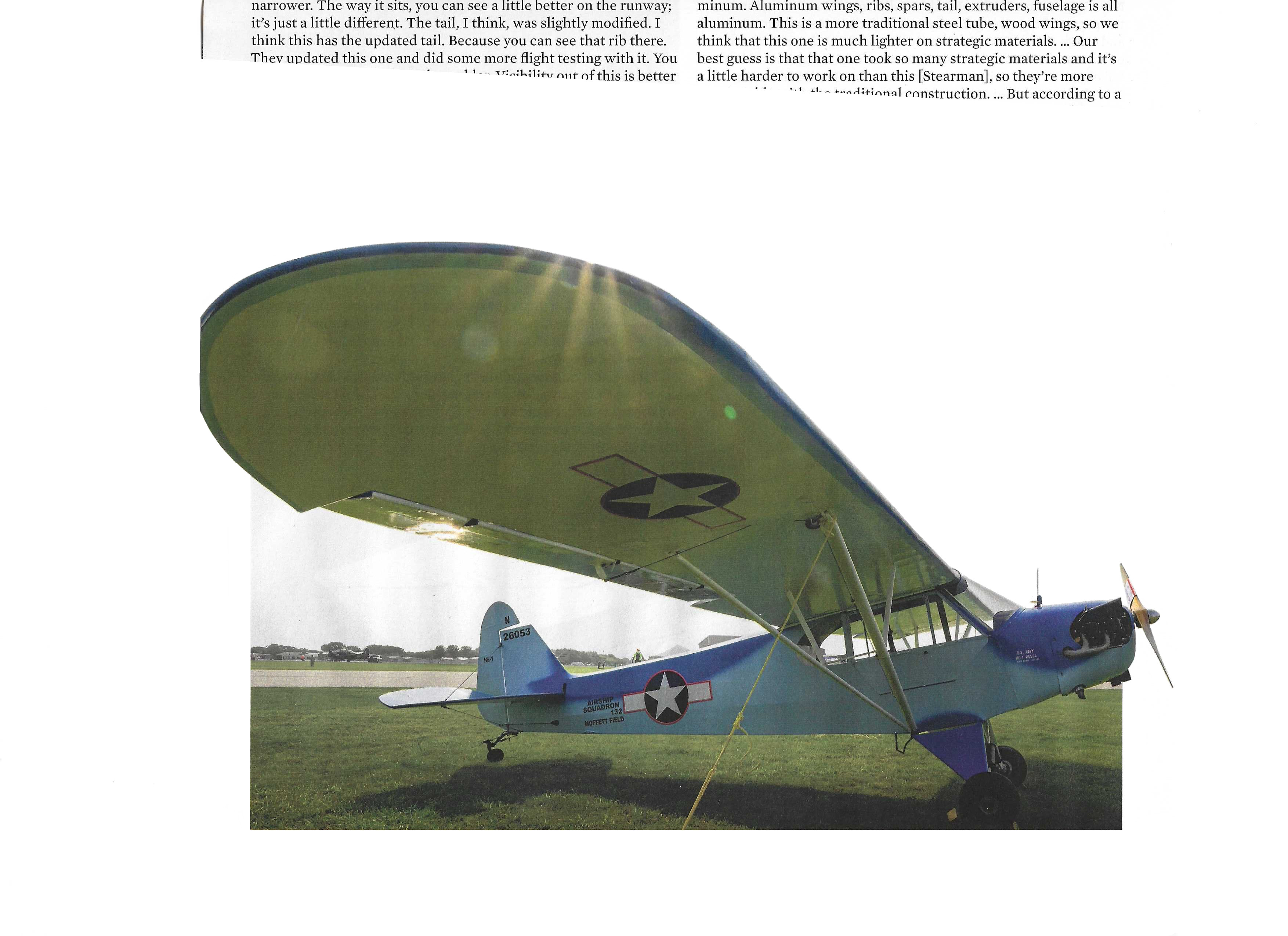
Piper NE-1
A little-known version of the Piper J-3 Cub, the NE-1 served with the U.S. Navy during WWII as a training, reconnaissance, and coastal patrol aircraft. NE-1s were often attached to airship squadrons during the war. Of the 230 J-3s ordered by the Navy, most of them were painted the standard “Lock Haven yellow,” though a number received blue camouflage paint for unknown reasons. While his aircraft is not a true NE-1, Donald Duck, EAA 43797, painted his Cub in that paint scheme to represent the Navy version of the J-3 and parked it in Training Command at AirVenture 2024.
“When I first started rebuilding it, which was a long time ago when we first took it down, I had seen a postcard that had this Cub on there, with this camouflage paint scheme,” Donald said. “It was from Airship Squadron 32. I had seen that postcard, and I thought, ‘Man, if I ever get this thing done, that’s the
way I want it painted.’ The guy that painted it did not want to paint it that color. He said, ‘Cubs should be yellow’ I had a hard time convincing him to paint it this color. But he did. And another thing, it was kind of hard making a Navy airplane out of it, when I flew in the Air Force.”
Established on January 31, 1942, Airship Patrol Squadron 32—later redesignated Blimp Squadron (ZP) 32—was based at Naval Air Station Moffett Field in California. ZP-32’s mission was to operate blimps along the coast to seek out enemy submarines and mines. Up until 1942, the only lighter-than-air training and operations facility in the United States was at Naval Air Station Lakehurst in New Jersey. After the attack on Pearl Harbor, the Navy knew it needed lighter-than-air coastal patrol on the West Coast, which lasted through the war, with ZP-32 decommissioned in November 1945. A number of NE-1s were assigned to ZP-32 during its three-plus years of existence.
For more on Donald and his NE-1, check out the January/February 2025 issue of Warbirds magazine.
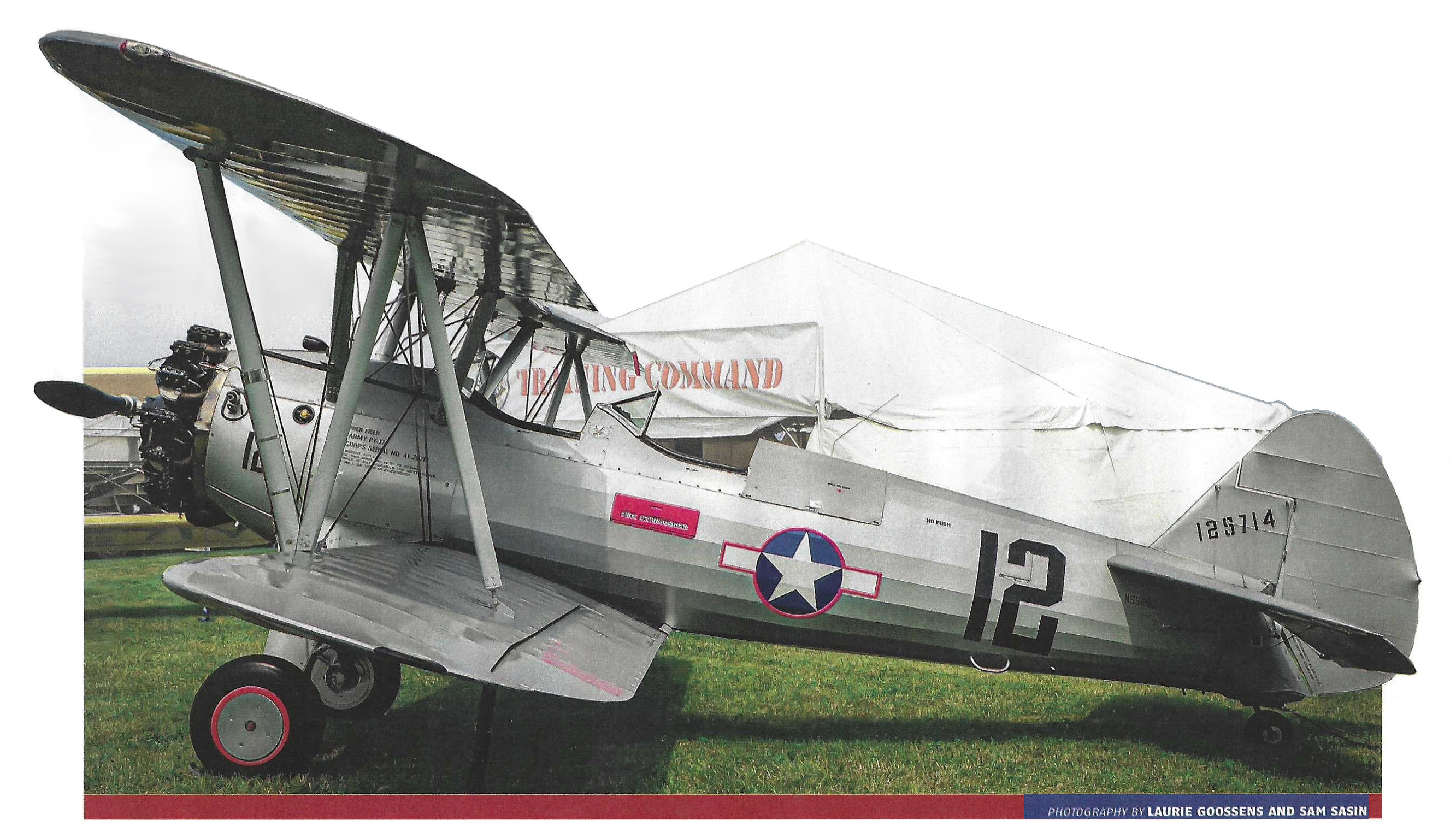
PT-17 Kaydet
As the production version of the Model 70 Stearman, the Model 75/PT-17 Stearman served as a primary trainer throughout WWII, with more than 10,000 units produced. The PT-17 parked in Training Command during AirVenture 2024, 41-25714, was built in 1942 and served with the U.S. Army Air Forces through 1945.
Notably, it was a trainer for the Women Airforce Service Pilots at Avenger Field in Sweetwater, Texas, as
part of the 318th AAF Flying Training Detachment, 31st Flying Training Wing.
Now owned by Andrew Porter, 41-25714 was involved in a weather-related landing incident toward the end of its military service in January 1945. After the war, it was sold to Stahmann Farms in Las Cruces, New Mexico, and then to Thomas Simmons in 1978. In 1998, Andrew purchased the airplane and restored it to its current WASP configuration in 2008.
Prior to ferrying some of the higher-performance USAAF fighters across the country, WASP trained in the PT-17, first receiving Stearmans in December 1943. WASP trainees received approximately 70 flight hours in the PT-17 before moving on to basic training, most likely in BT-13s.
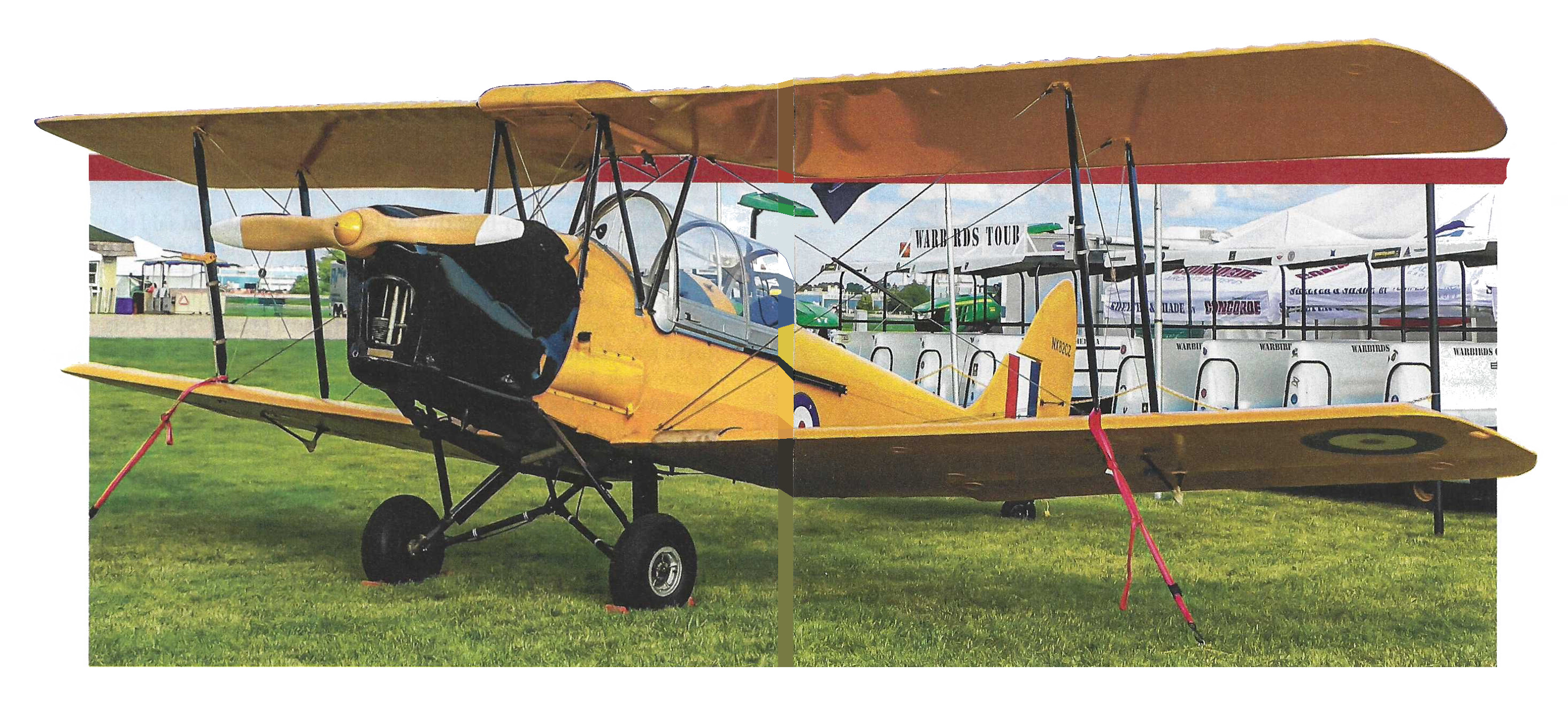
DE Havilland DH.82C Tiger Moth
Developed from the DH.60 Moth, de Havilland’s DH.82 Tiger Moth was introduced as a primary trainer for the Royal Air Force in the early 1930s. It served through the rest of the decade, through WWII, and well into the 1950s. As the principal type used in the British Commonwealth Air Training Plan (BCATP), the Tiger Moth trained Canadian, Australian, and New Zealand pilots along with those from the RAF. Nearly 9,000 DH.82s were built over the course of its production run from 1931 to 1944.
Located in Canada, the BCATP began in 1939 to train Allied air crews of the aforementioned nations, including pilots, navigators, bombardiers, wireless operators, gunners, and flight engineers. More than 130,000 crew members were trained over the course of
six years, with Roosevelt calling Canada the “aerodrome of democracy.” Along with Tiger Moths, the BCATP operated American-built Stearmans and Fleet Finches for primary training. During its peak in 1943, the BCATP employed more than 100,000 personnel at 107 schools and 184 supporting units at 231 locations across Canada.
The Tiger Moth in attendance at AirVenture 2024 was a C-model, featuring the distinctive sliding canopy and other changes from earlier variants, built in 1941 and is currently owned by the Delaware Aviation Museum. Assigned serial No. 5935 by the Royal Canadian Air Force, the airplane rolled out of the de Havilland Canada production facility in Toronto, Ontario, and then served with the RCAF through the summer of 1945.
Following the war, 5935 was sold to the Royal Canadian Flying Club Association, an organization that owned it until 1976. Over the past 50 years, a number of private individuals owned the airplane before it went to the Delaware Aviation Museum in Georgetown, Delaware, in May 2015.
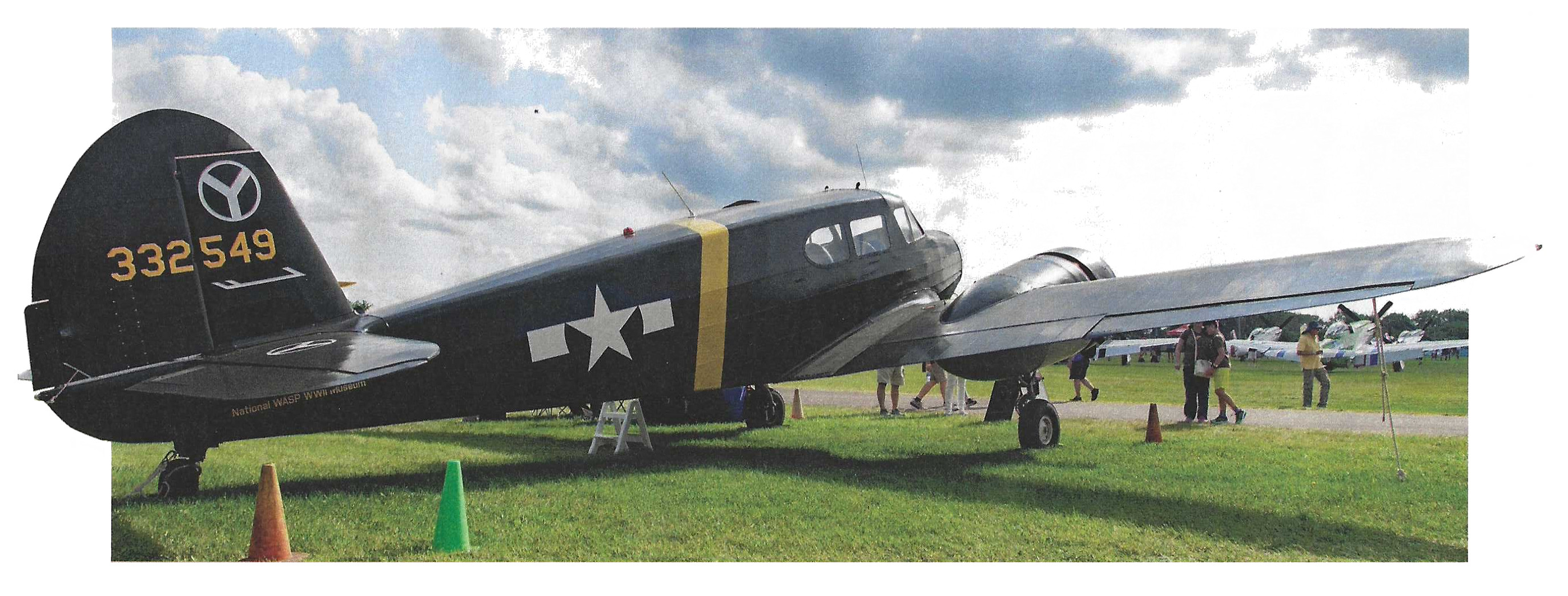
UC-78/AT-17 ‘Bamboo Bomber’
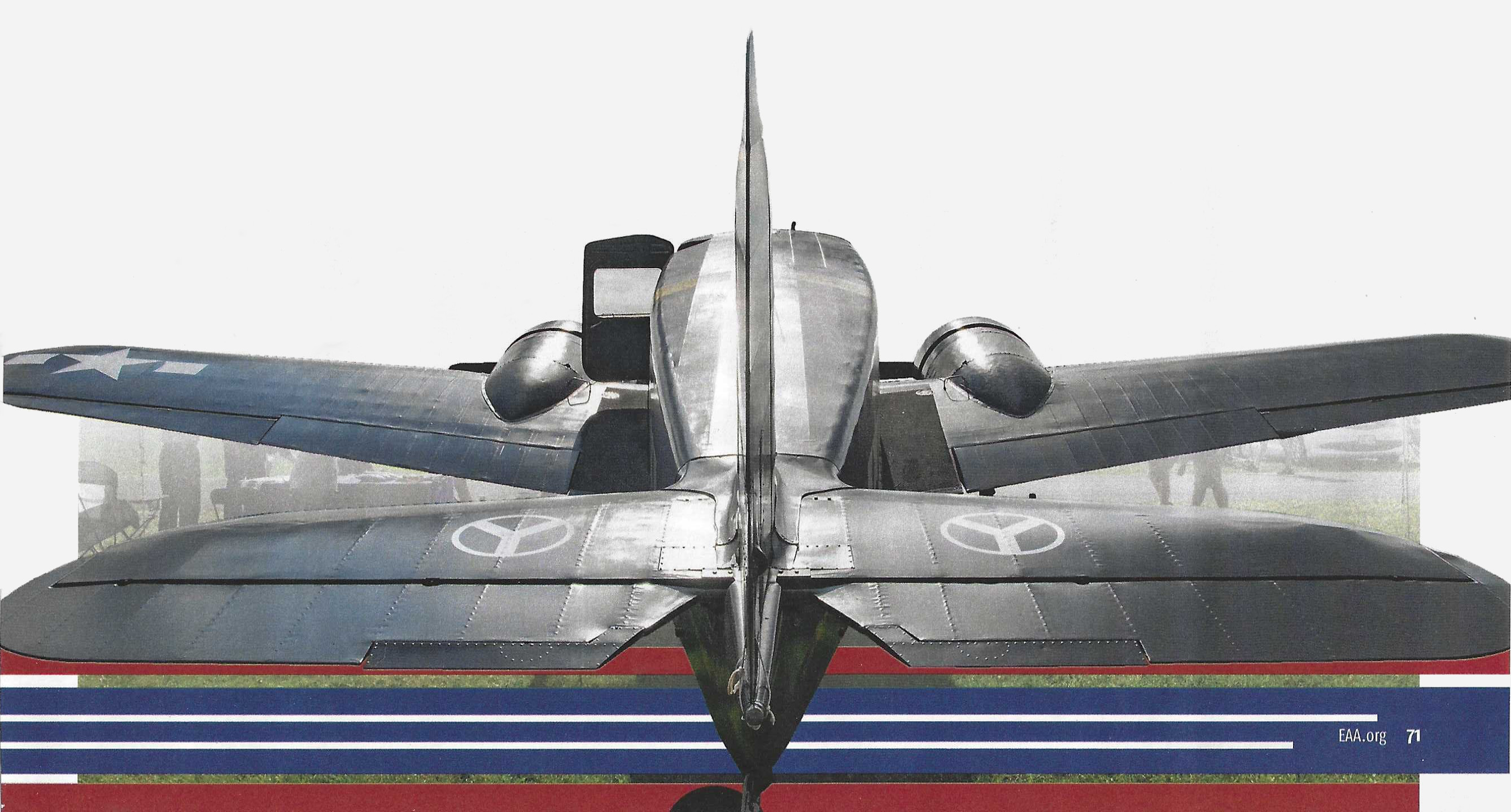
Operated by the National WASP WWII Museum in Sweetwater, Texas, Cessna UC-78 43-332549 is one of only five known “Bamboo Bombers” still flying. As the only twin-engine trainer parked in Training Command at AirVenture 2024, 43-332549 represents the training path pilots would take en route to flying bombers and cargo/transport aircraft.
Derived from the civilian Cessna T-50, the Bobcat came to be known by a variety of designations during its military service, including AT-8, AT-17, C-78, UC-78, and Crane. Because the type was constructed from nonstrategic materials, having wooden wings and a fabric-covered steel tube fuselage, it was unofficially nicknamed the “Bamboo Bomber” by pilots.
AT-6 Texan
Along with the Stearman, perhaps the most-famous American trainer from WWII is the North American Aviation-produced AT-6 Texan. After completing primary training, pilots would move on to basic training, flying something such as the BT-13, and then finish up with advanced training. If they were going to be a fighter pilot, they’d train in a T-6.
With more than 15,000 built, the T-6 is synonymous with Allied fighter pilot advanced training during the war. The Texan representing the iconic type in Training Command during AirVenture 2024 was built in 1945 as an AT-6D-NT at the North American facility in Dallas, Texas.
Assigned serial No. 44-81453, the airplane briefly served the U.S. Army Air Forces, primarily at Perrin Field in Sherman, Texas, with the 2537th Base Unit. In April 1945, 44-81453 crashed during a training flight. In June 1948, the airplane was redesignated as a T-6D and transferred to the 3555th Maintenance and Supply Squadron at Perrin, but it was unfortunately damaged in another accident in November 1952.
Stored at Davis-Monthan Air Force Base, the airplane went into civilian hands just a few years later and was eventually used in air races in 1969 and 1970, flown by then-owner Fred Edison at the Cleveland National Air Races and Florida National Air Races. After moving through private hands in the 1970s, ’80s, and much of the '90s, current owner Michael Gillian, EAA 307378, purchased purchased the airplane in December 1999 and raced the airplane at the
National Championship Air Races in Reno four times in the early 2000s.
2025
AT-6 Texan
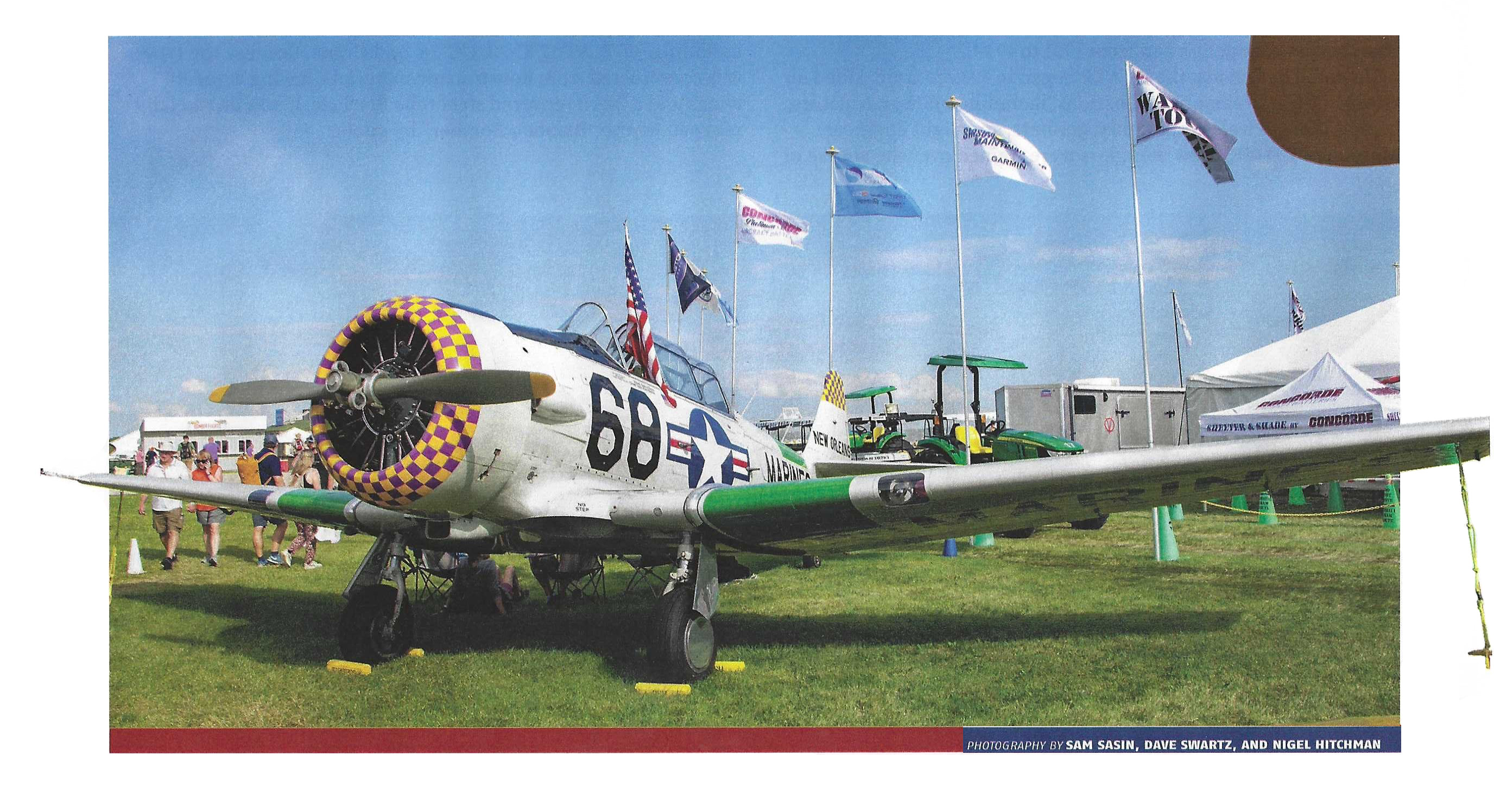
Owned by the National WASP WWII Museum, AT-6D serial No. 41-34166 was acquired by the museum a couple years ago to help tell the story of the women of WASP.
The airplane was built by North American Aviation at its Grand Prairie, Texas, facility and served during WWII at Luke Field (now Luke Air Force Base) in Arizona, which was the largest single-engine advanced flight training school in the USAAF.
As described on the National WASP WWII Museum website, “When asked about their favorite plane flown in training at Avenger Field, WASPs invariably replied, ‘The AT-6 Texan.' ”
AT-11 Kansan
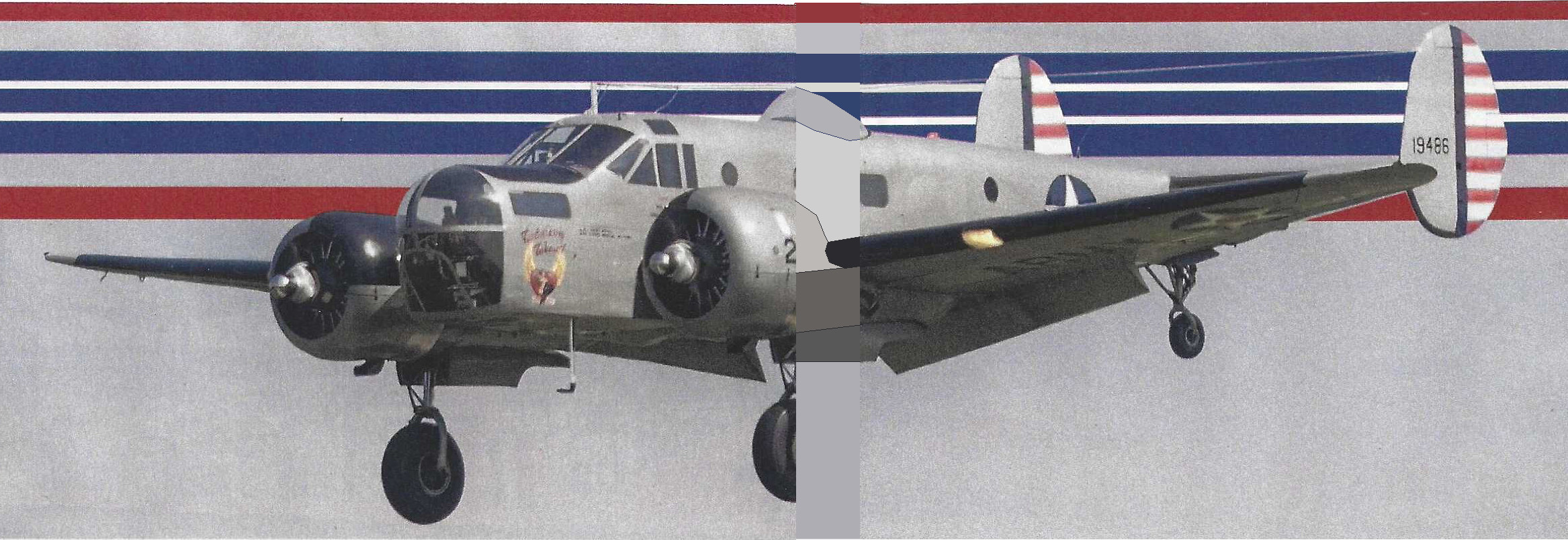
Built by Beechcraft, the AT-11 was adapted from the civilian twin-engine Beech 18 for bombardier training. Of the 45,000-plus USAAF bombardiers that served during WWII, about 90 percent of them trained in a Kansan. Modifications from the standard Beech 18 included a transparent nose, bomb bay, bomb racks, and flexible guns.
Beginning in 1943, AT-11s carried a Norden bombsight and a C-1 automatic pilot. The USAAF ordered more than 1,500 Kansans between 1941 and 1945.
The AT-11 at AirVenture 2025, serial No. 41-9486, is owned by John and Frances Hess. It entered service with the USAAF in 1942 and was used for training at Victorville Army Airfield in California and Childress Army Airfield in Texas during the war.
In the years following the war, it continued to serve with the U.S. Air Force in the Air Force Reserve in Birmingham, Alabama, as
well as with troop carrier wings in Miami, Florida, and Memphis, Tennessee.
The airplane went into civilian hands in 1959 and, after a number of owners, was acquired by John and Frances Hess in 2012.
Fairchild PT-26
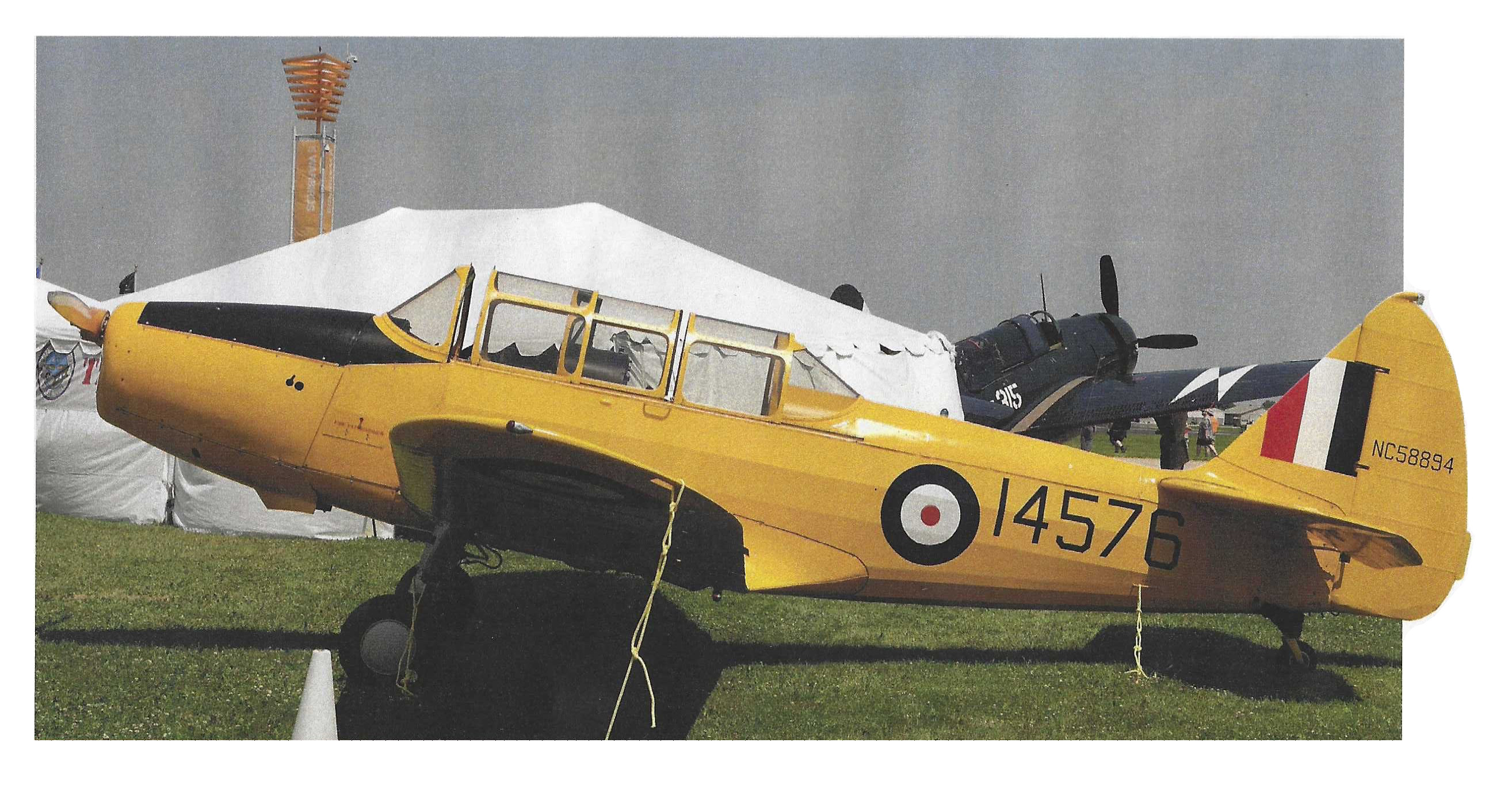
Developed from the American PT-19 primary trainer, the Fairchild-produced PT-26 was built for the Royal Canadian Air Force for use in the BCATP.
Known in Canada as the Cornell, the primary difference between the PT-19 and PT-26 was the fact that the Cornell had an enclosed cockpit to account for Canada’s severe winter weather conditions.
Also designated M62A, the PT-26 in attendance at AirVenture 2025 is owned by Tim Savage and Vintage Flying Machines, based in Indiana.
2026
While it’s still a bit early to be thinking about AirVenture 2026, Rick said he’s already got some ideas percolating for the Training Command area, with the hope of highlighting the Civilian Pilot Training Program, a critical aspect of American pilot training during WWII.
Sam Oleson, EAA 1244731, is EAA's senior editor, contributing primarily to EAA's print and digital publications, and loves studying aviation history. Email Sam at soleson@eaa.org.
 |
 UC-78/AT-17 ‘Bamboo Bomber’ |
 St. Louis Ypt-15 and Stearman Model 70 |
 St. Louis Ypt-15 and Stearman Model 70 |
 Piper NE-1 |
 DE Havilland DH.82C Tiger Moth |
 PT-17 Kaydet |
 UC-78/AT-17 ‘Bamboo Bomber’ |
 AT-11 Kansan |
 AT-6 Texan |
 Fairchild PT-26 |