Mequon & Thiensville, WI
The Mequon-Thiensville Historical Society 1987
Mequon-Thiensville Historical Society
Our Vision
The vision of the Mequon-Thiensville (MT) Historical Society is to provide educational services and resources to the citizens of Mequon and Thiensville in an effort to inspire an appreciation for our rich local history. We plan to achieve this goal through the preservation of archives as well as educational programs and events for children and adults.
What We Do
The MT Historical Society is a membership-driven non-profit community organization. Working together with volunteers, local businesses, members, and generous donors, the Society exists to make sure that our local history is collected, organized, and accessible to those interested in learning about our community’s past, family histories, property records, and the interesting stories that make up our past.
We pride ourselves as being “Our Community Storytellers.” We believe that history comes to life when names and dates, whether important or trivial, are shared as stories. The How and Why help to more fully understand and appreciate the Who and When, and we believe that is best done through stories.
Our History
The Village of Thiensville and the City of Mequon share a common history that grew out of the former Town of Mequon. The earliest non-natives in our area were French fur traders and members of the military. Settlers started to arrive in the mid-1830s followed by a large influx of European and Yankee homesteaders. Before the US Government could publically sell land, a series of treaties were reached to relocate the indigenous people in our area. Under the Indian Removal Act of 1830 and Treaty of Chicago signed in 1833, indigenous people were relocated west of the Mississippi River by 1835. This relocation often involved the use of military force.
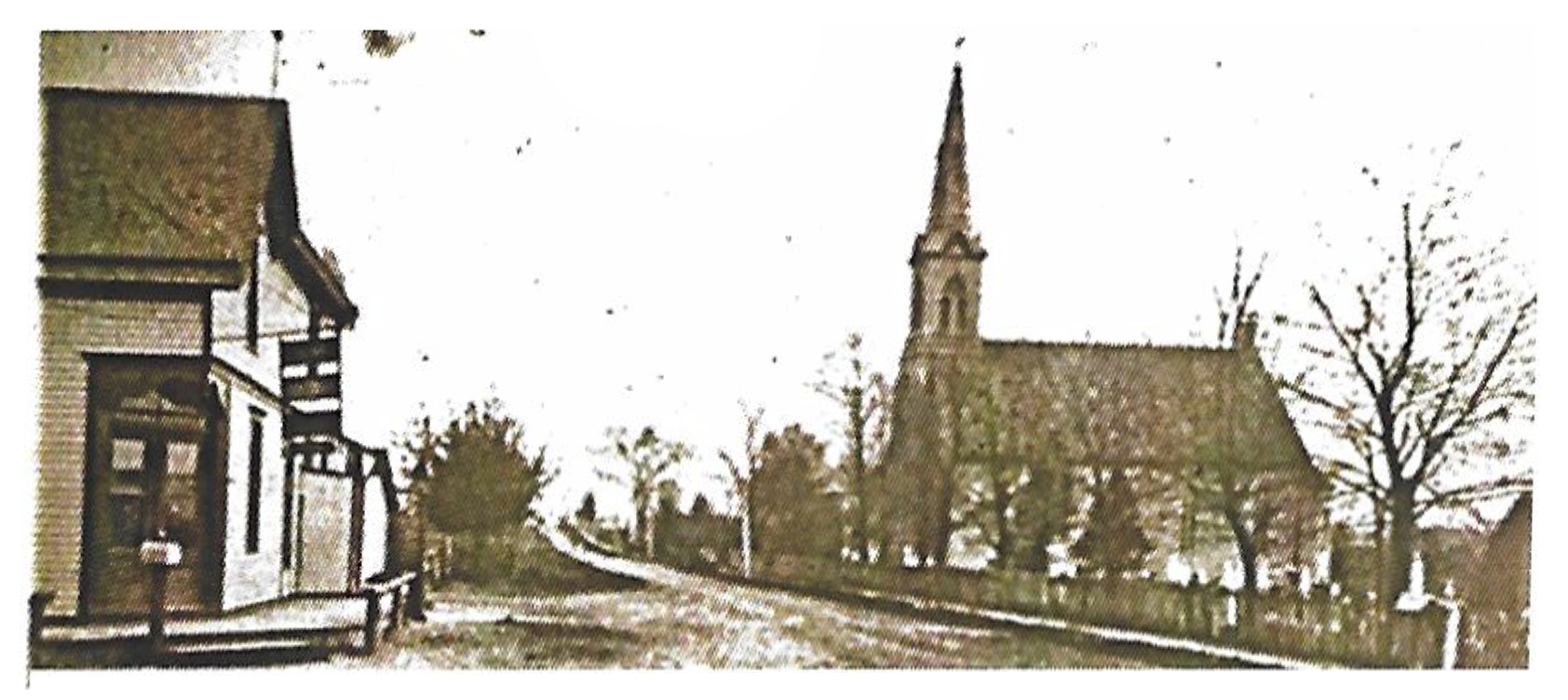
Freistadt Community circa 1900’s
By 1839, all of the Town of Mequon was surveyed and offered for sale for $1.25 per acre. Land speculators from the east saw the huge profits made in past Northwest Territory land purchases, and flocked to our area to make their fortunes. However, the land sale also attracted settlers who intended to make this their home. In 1839, a group of German-speaking immigrants from Pomerania purchased over 1,000 acres and formed the community they called Freistadt {German, “free city”}. They were Old Lutherans who were opposed to the Reformed Church that was being forced on them by their Archduke {Frederick William III of Prussia reign from 11/16/1797 to 6/7/1840}. In the 1840s, the Freistadters and others formed a very active farming community throughout the Town of Mequon.
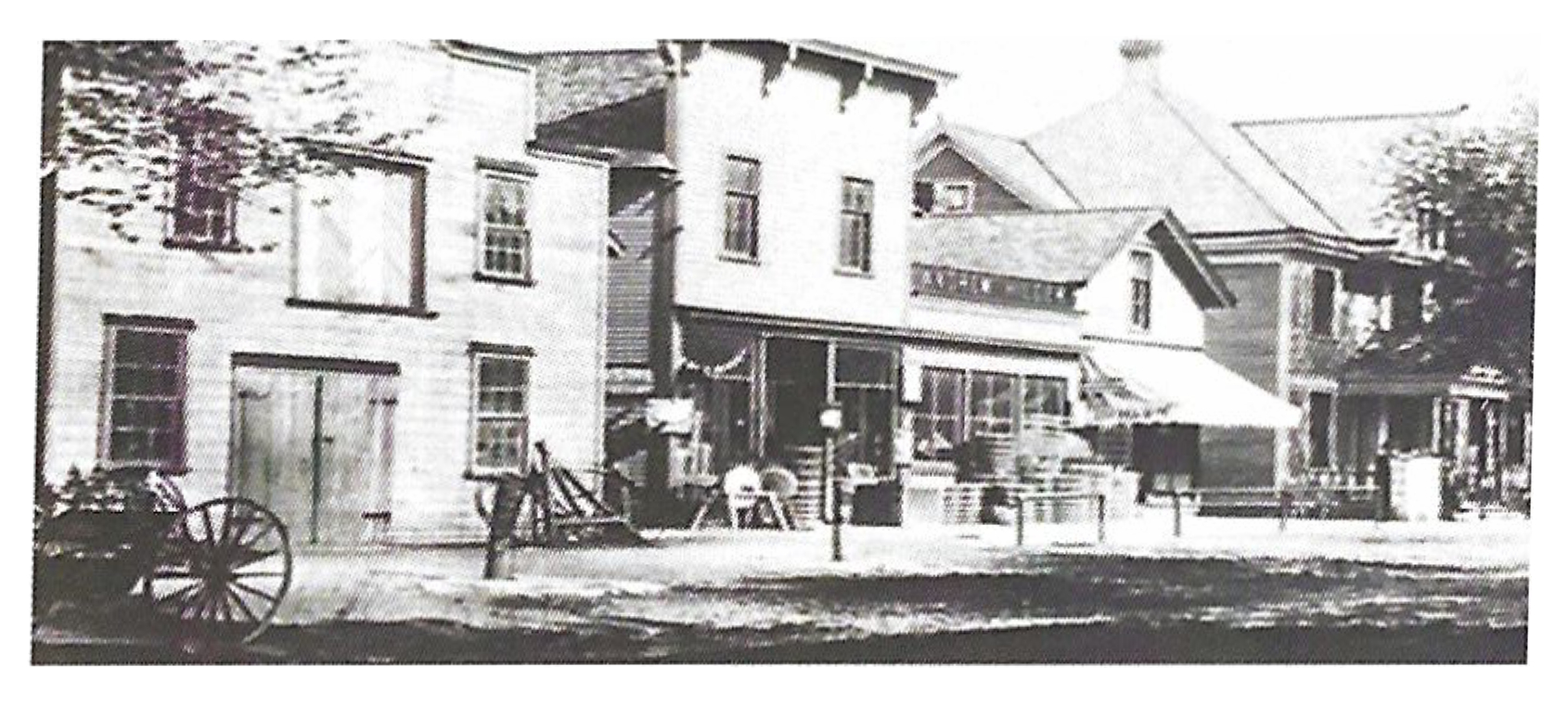
Early Commercial Thiensville circa 1880’s
Three years later, John Henry Thien {Joachim Heinrich} and his noble-born wife arrived and settled on 148 acres along the Milwaukee River. Unlike the Freistadt settlers who came to our area for freedom of religion, Thien came for freedom from religion. Thien was a Freethinker who fled the oppression of the church and the nobility he saw in his native Saxony.
Had he remained in Europe, he may well have been assassinated in the 1848 rebellion that rocked much of Europe. Thien and others formed a commercial, social, and cultural community along the Milwaukee River. Thiensville, incorporated as a village in 1910, experienced dramatic growth following World War II and following the war’s end, the need for housing grew.
Mequon incorporated as a city on the Twenty-Fourth day of May, 1957 in part to stop the annexation of land by neighboring communities including the Villiage Thiensville. The requirement of a five-acre minimum for new home construction limited the residential growth of Mequon, but this zoning was eventually softened as developers became more active in transforming Mequon into more of a bedroom community.
As the populations of Thiensville and Mequon grew following WW I, the school systems in place no longer proved to be adequate or cost efficient. Historically, Thiensville and the Town of Mequon included 14 separate school districts that served students up through eighth grade. High school students attended school in Cedarburg or Shorewood and later Nicolet High School in Glendale. Homestead High School opened its doors in 1959, and all of the 14 original school districts were united by 1972 to form the Mequon-Thiensville School District.
Mequon-Thiensville Historical Society Founded in 1987
Contact Us
| Phone: | 262-242-3107 |
| Email: | mthistory1839@gmail.com |
| Web: | www,mthistoricalsociety.org |
| Like us on FaceBook | |
| Hours: | Thursdays 1:00 – 4:00 |
| or by Appointment |
Mequon Thiensville Historical Society
216 Green Bay Rd #102
Thiensville, Wi. 53092
The Mequon-Thiensville Historical Society is a.501 (C) (3) Non-Profit Organization
Donations and Membership dues may be Tax Deductible
Volunteers are always needed
Celebrating Over 30 Years of Service To The M-T Community
Mequon - Thiensville Historical Society
“Your Community Storytellers”
216 Green Bay Road, #102
Thiensville, W1 53092
Phone: 262-242-3107
Email: mthistory!839@gmail.com
Facebook Group: You know you are from Mequon-Thiensville if …www.facebook.com/groups/MequonThiensvilleMemories
Extra Images from the Internet
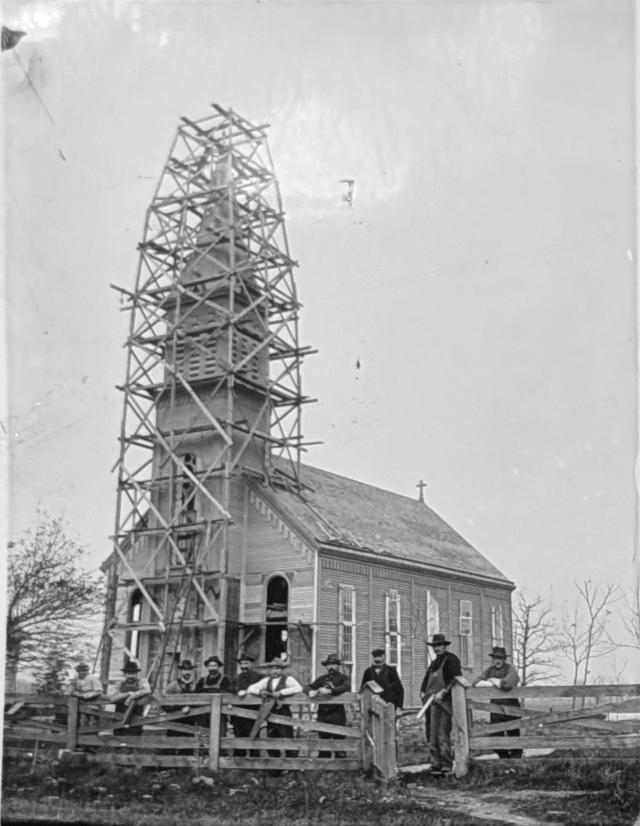 St. James Church was a wooden structure built in the 1800s. |
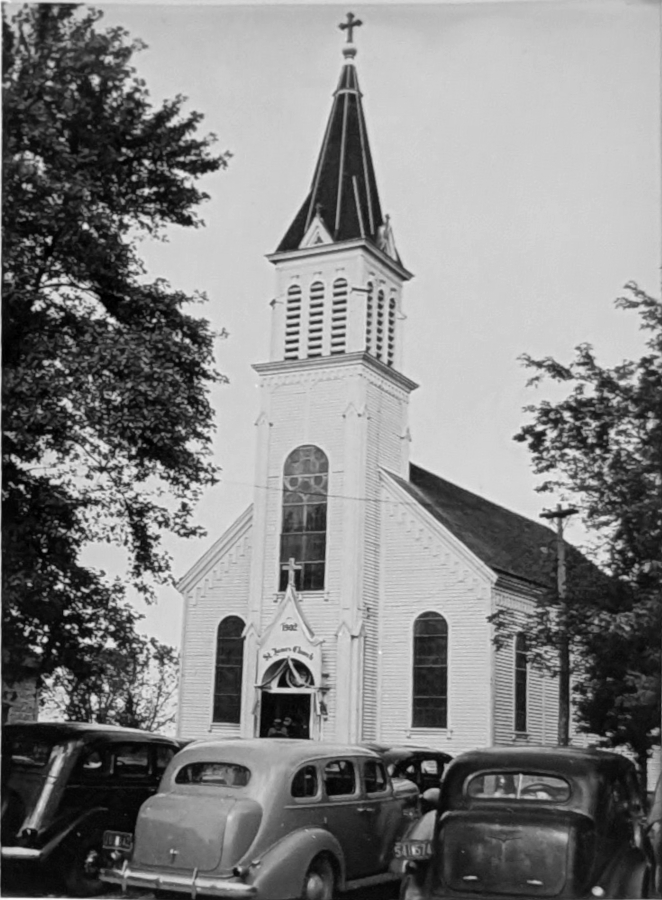 The fourth church on the St. James site was build in 1902. This came to be known as "the little white church." |
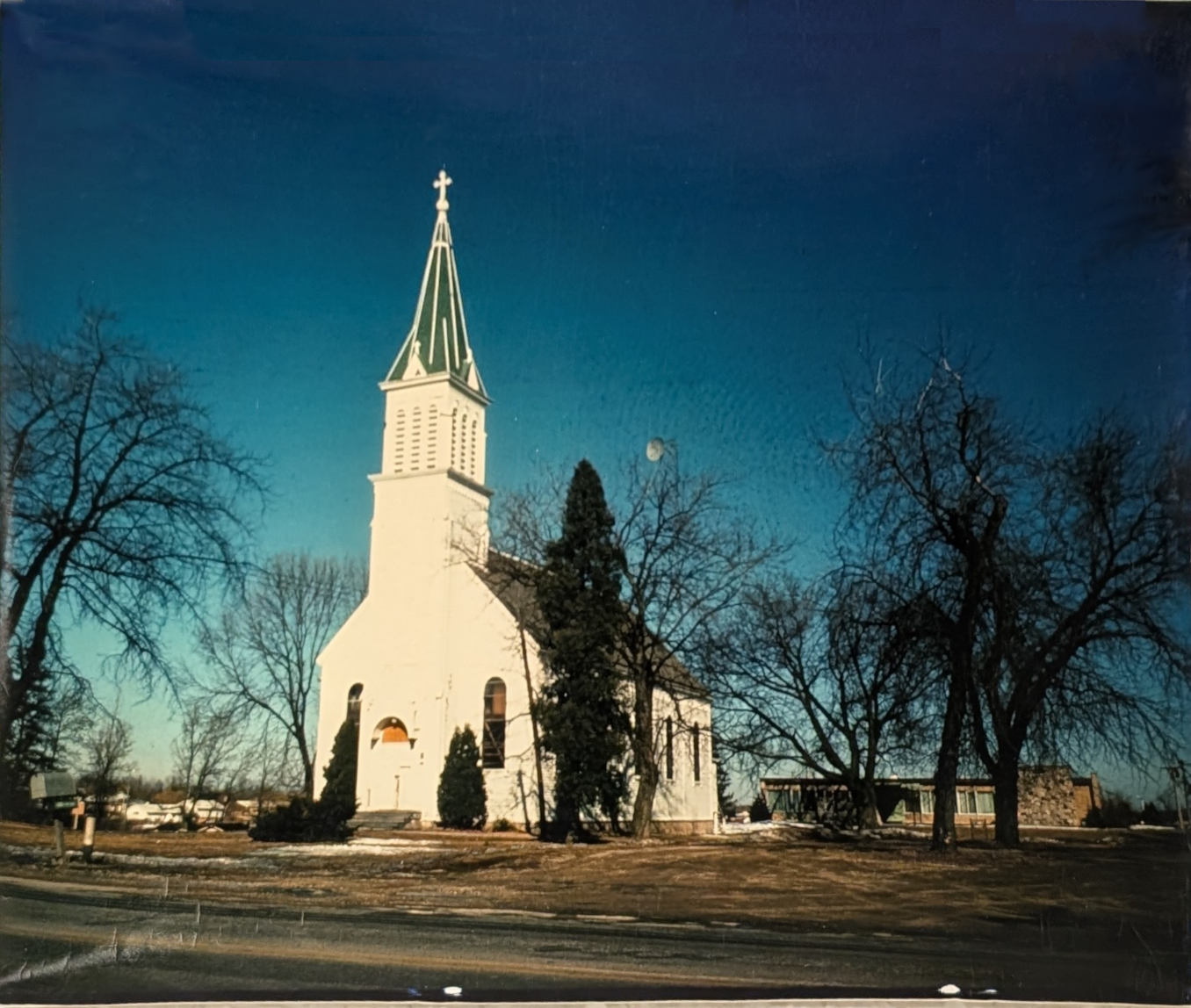 St. James Church as it may have appeared in the mid-1900s. |
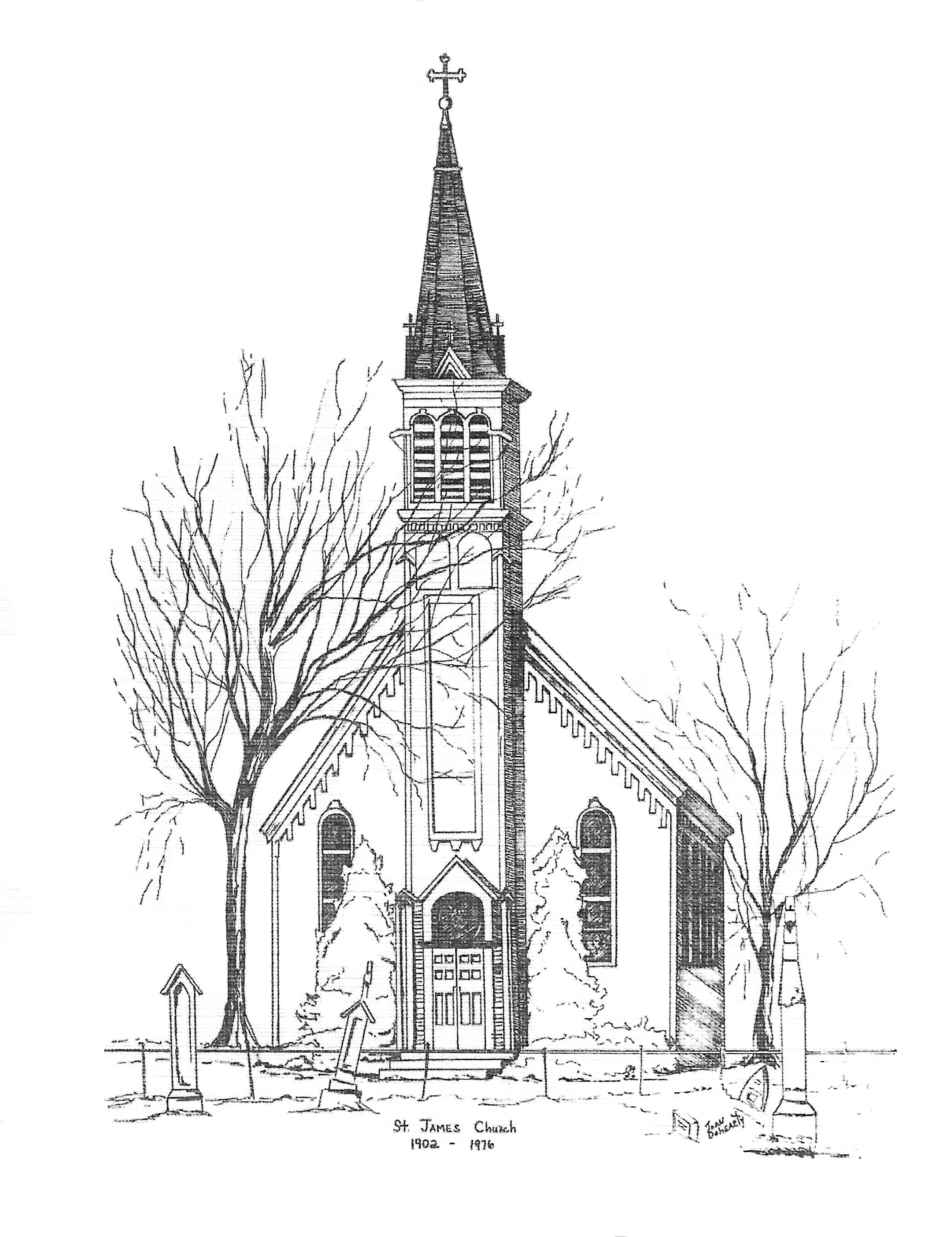 St. James Church, sketch done by a local artist. |
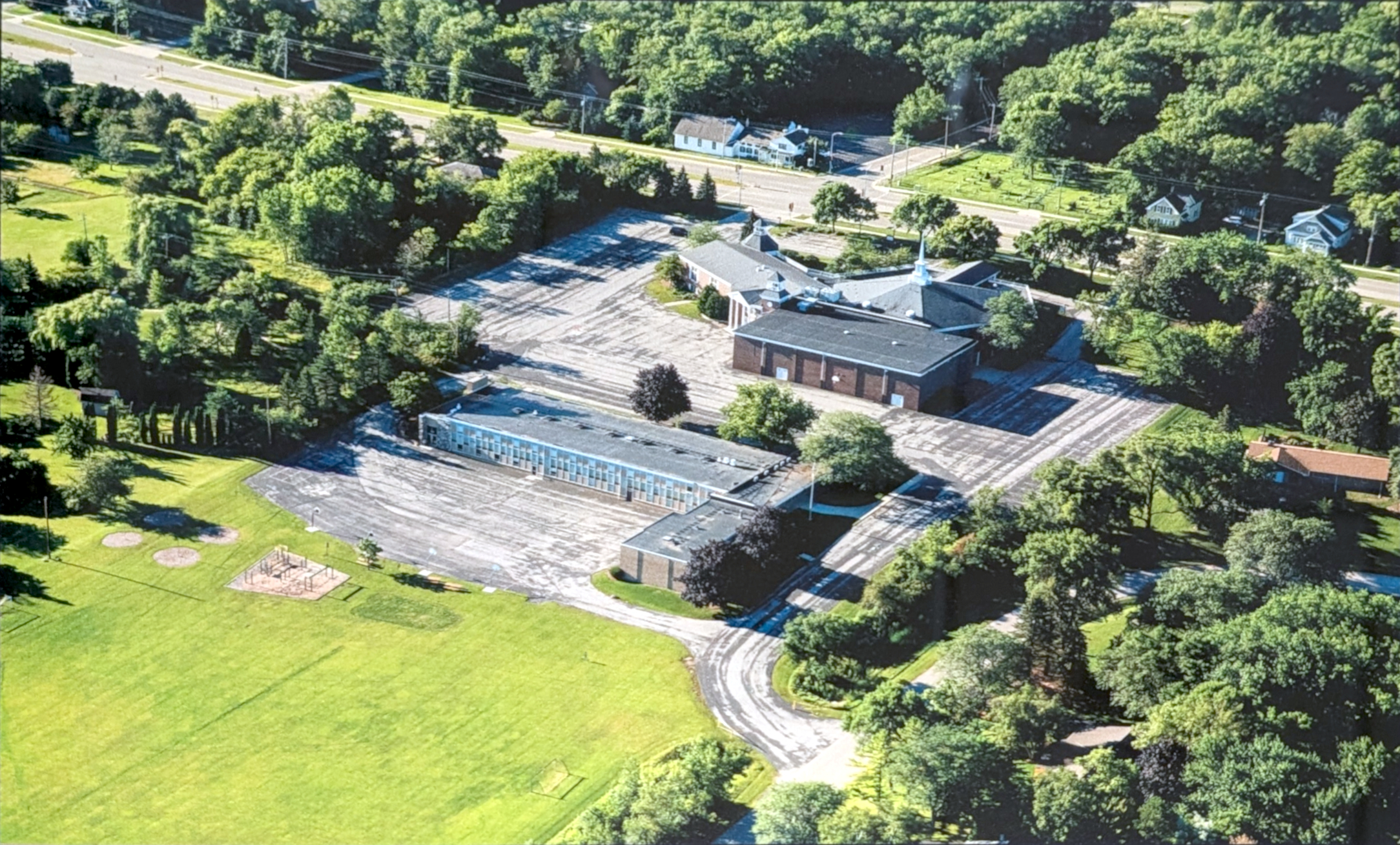 Lumen Cristi Church circa 2013. |
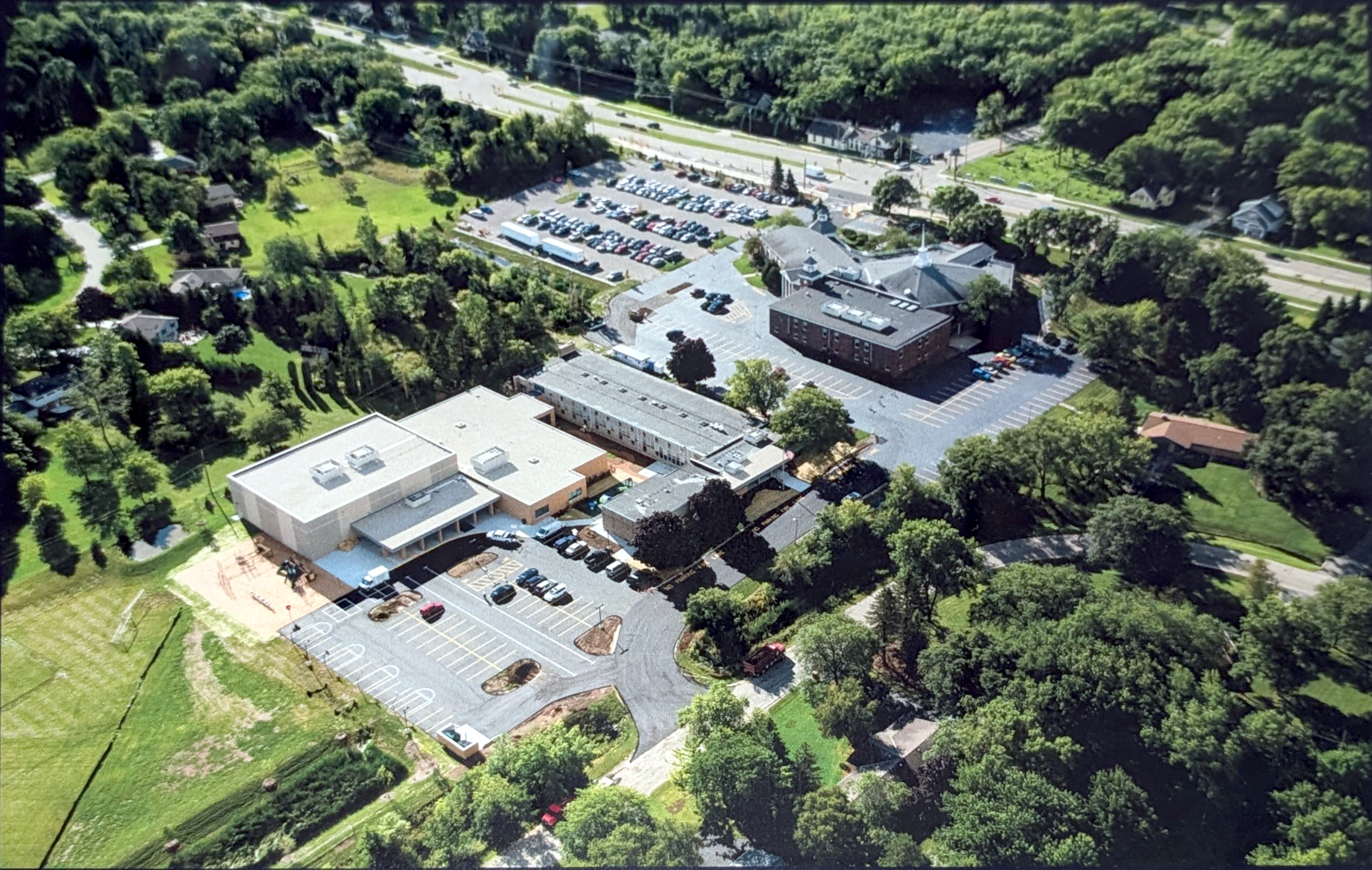 Lumen Cristi Church circa 2016. |
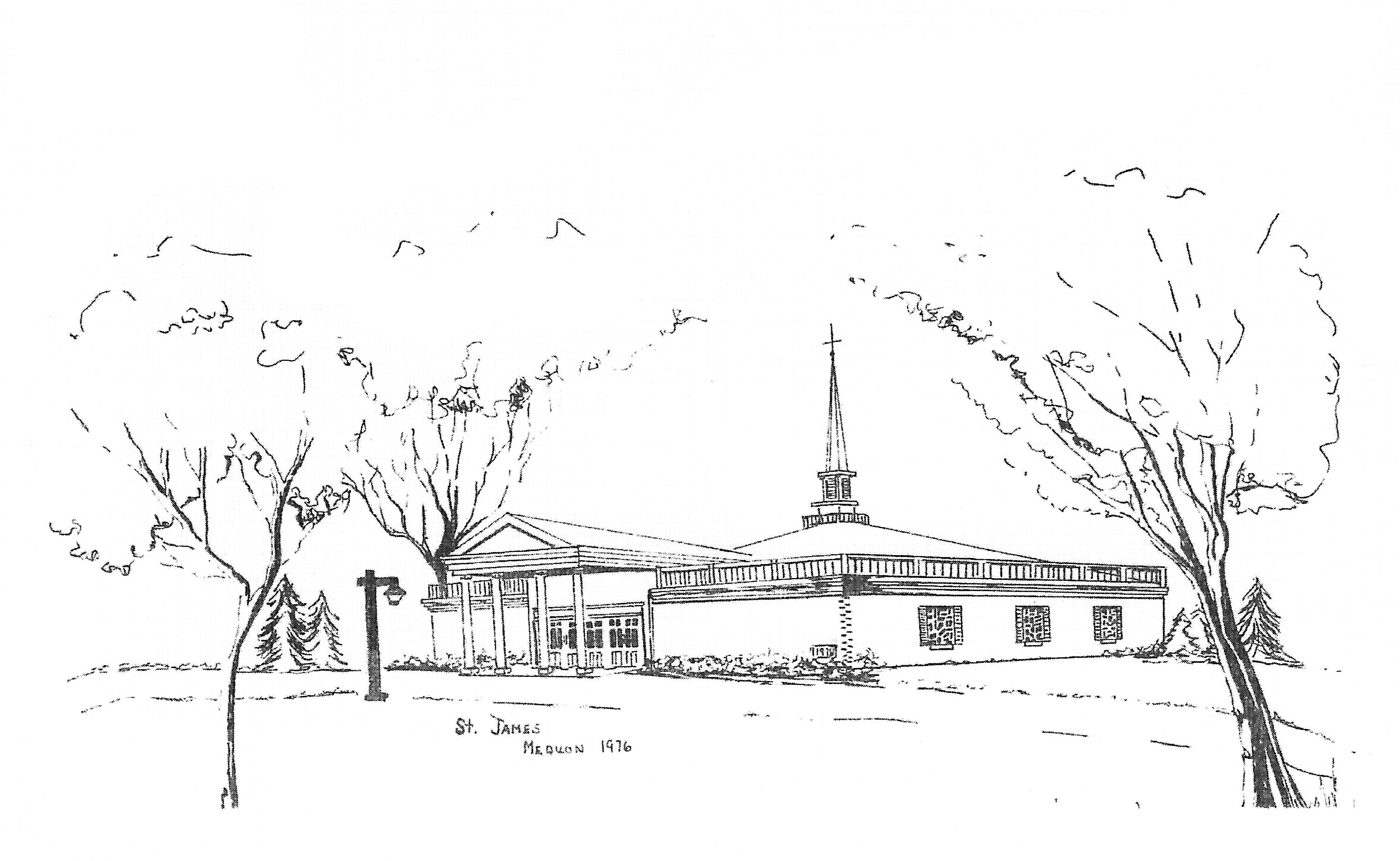 St. James Church circa 1976, sketched by a local artist. |
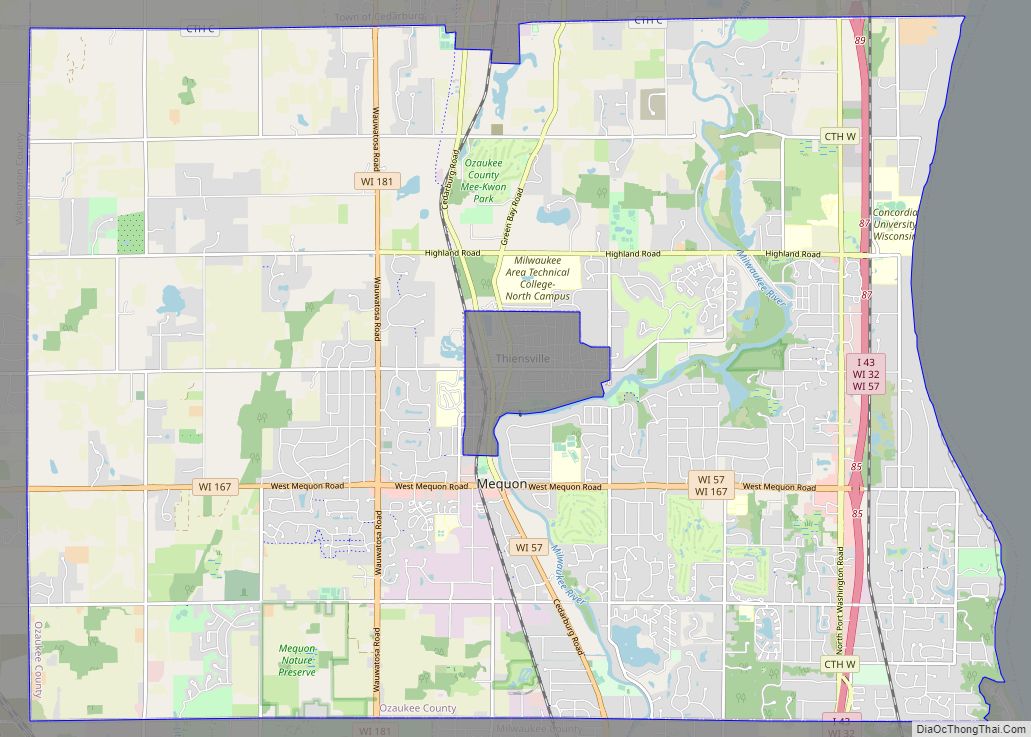 Map of the City of Mequon, which is represented by the gray areas surrounding the Village of Thiensville, WI. |
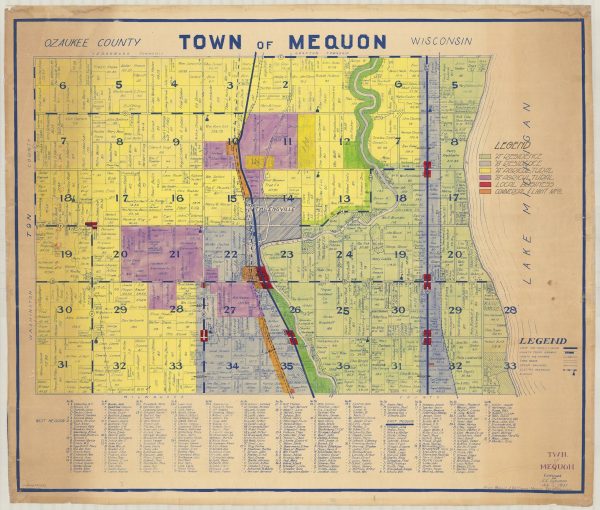 Map of the Town of Mequon before it was incorporated as a city. Under Andrew Jackson, the county of Ozaukee was divided into 6x6 mile segments (numbered 1-36 on the left) and further divided into 1x1 mile segments. The area on the far right by the lake was further divided. |
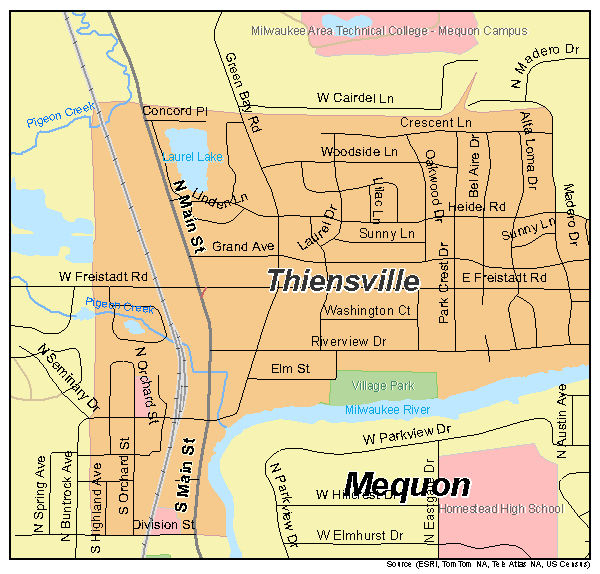 Map of Thiensville. The Town of Thiensville is inside the City of Mequon. |
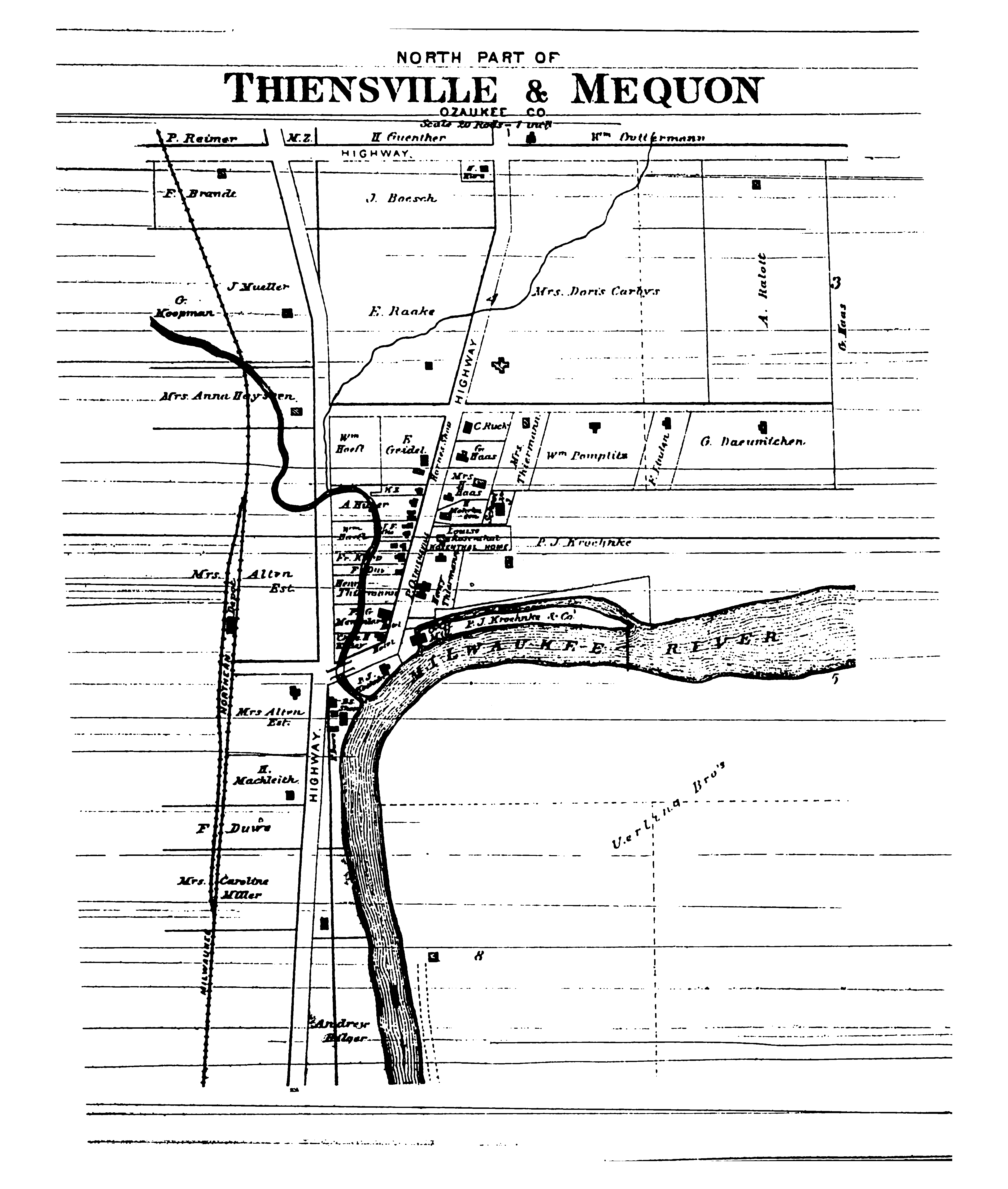 Map of Thiensville from 1892. Thiensville takes its name from its founder, John Henry Thien who left Saony, Germani in 1839, traveled across the ocean, the Erie Canal, and then by the Great Lakes by Steam Ship to arrive in the Milwaukee area. |
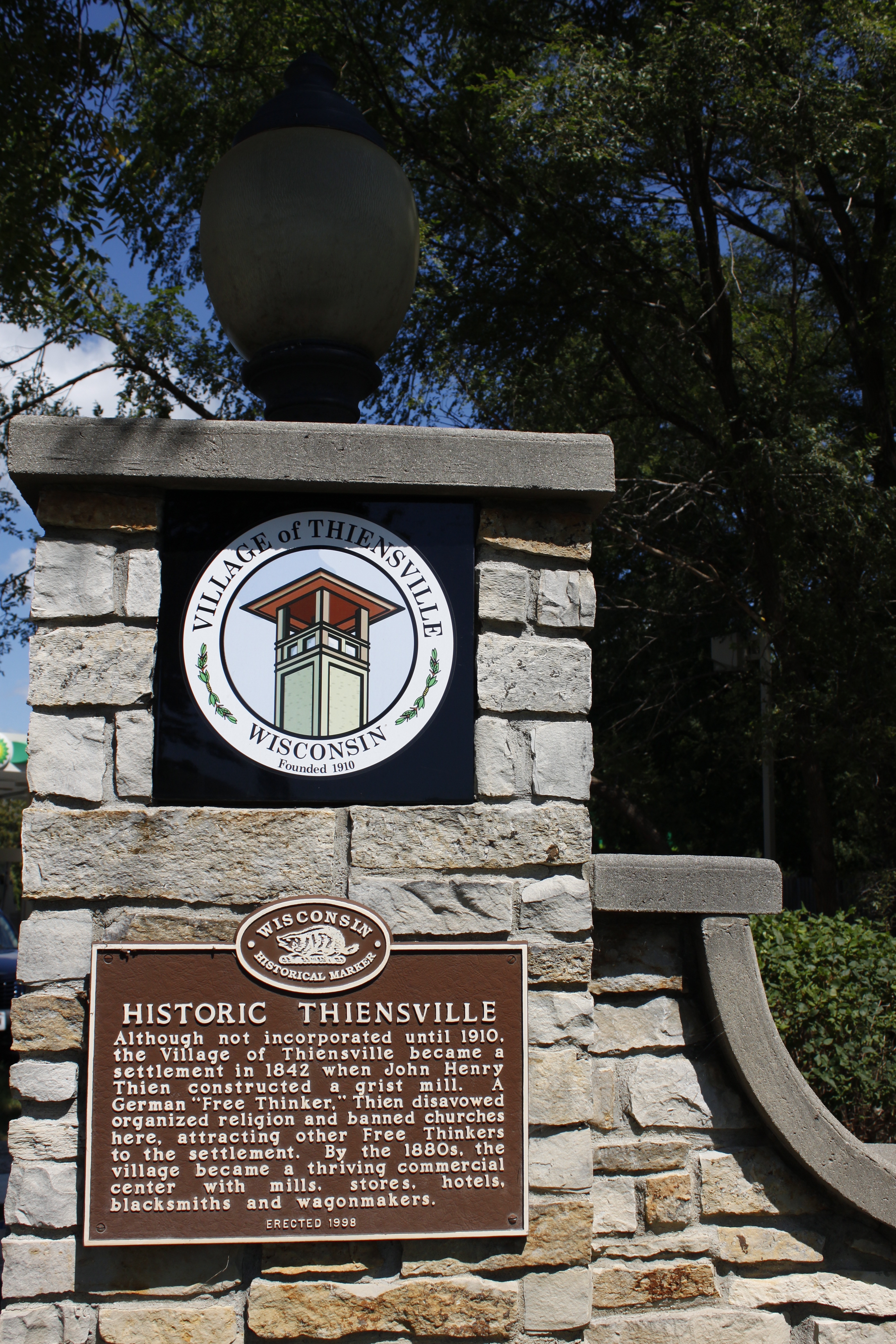 Thiensville Entrance. |
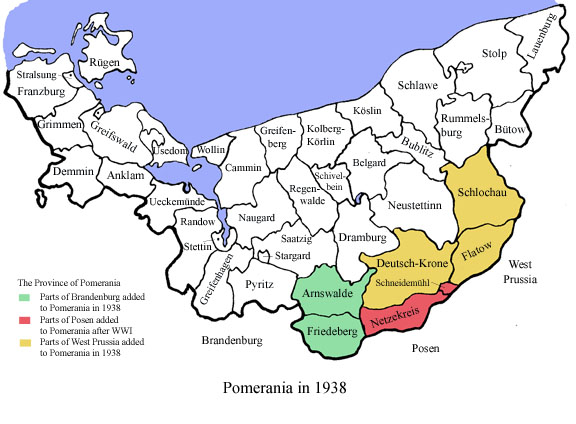 Map of Pomerania, Germany in 1938. Many of the original inhabitants of Thiensville arrived from this area of Germany. |
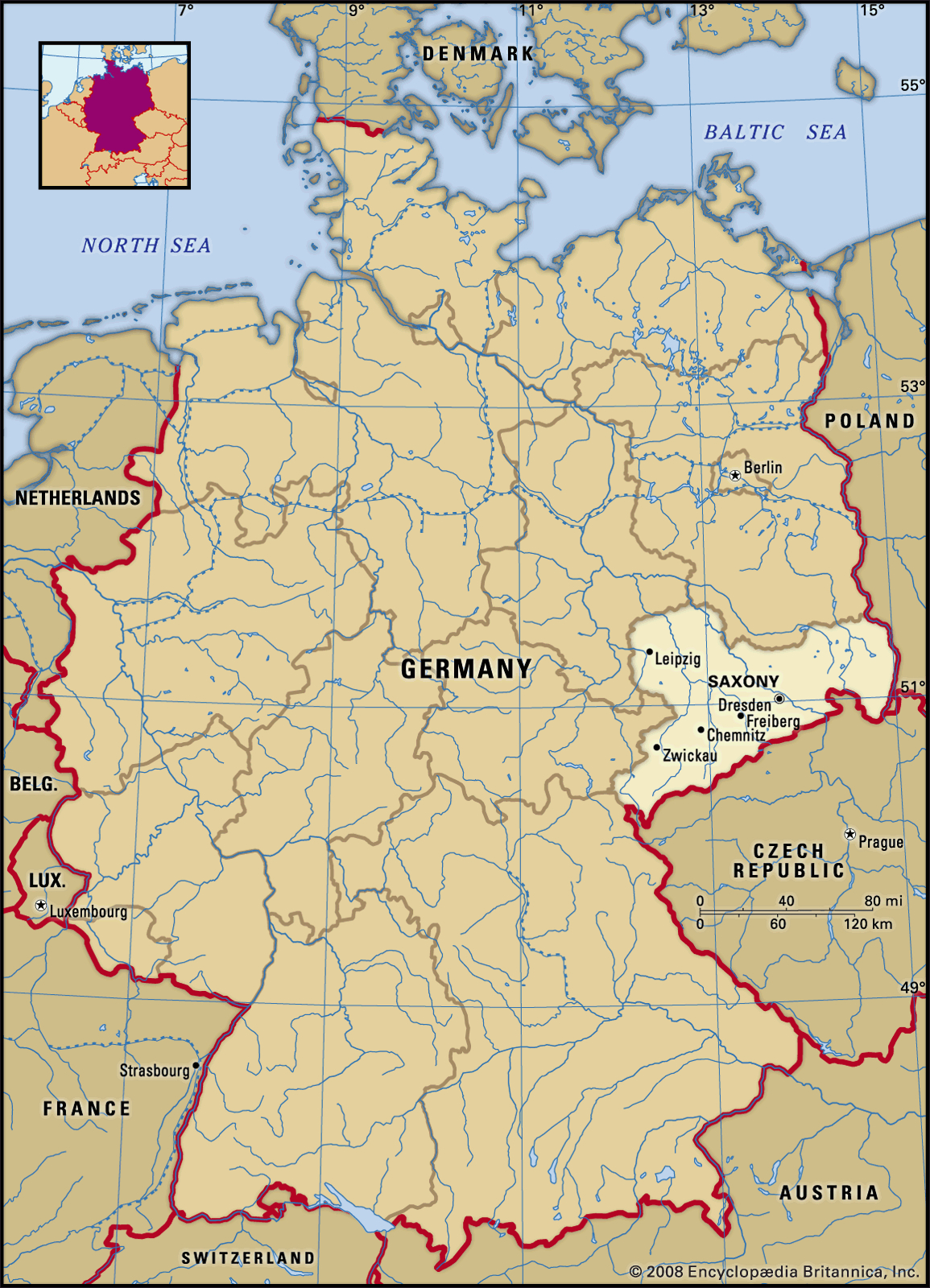 Map of Saxony. Many inhabitants also arrived from Saxony, Germany. |
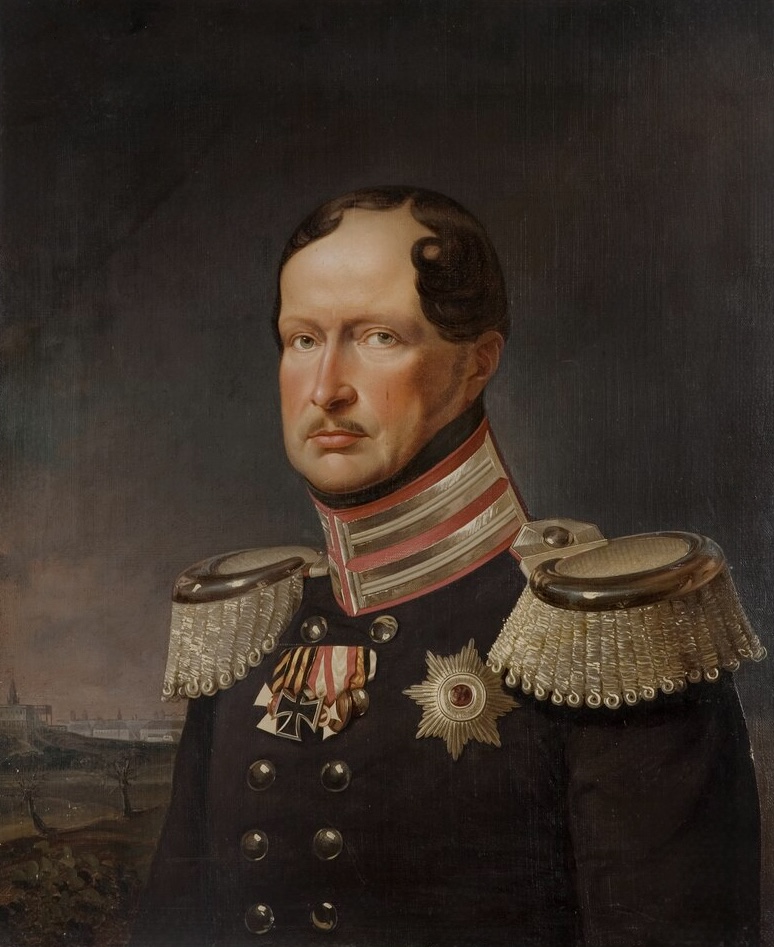 Frederick William III reigned in Germany in the 1840s. His presecution of religion forced may Germans to flee their home country to come to the Midwest. (Image from Wikipedia) |
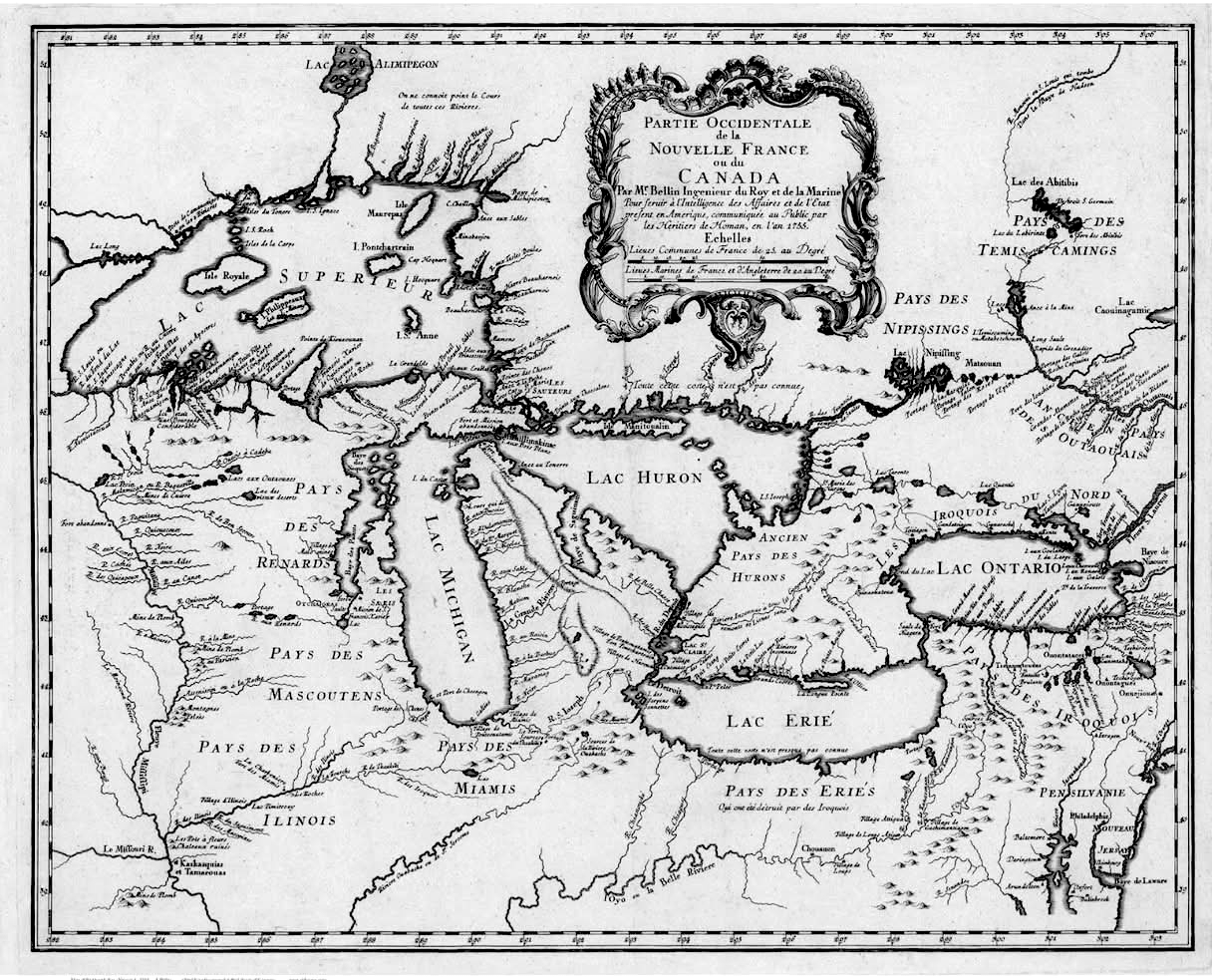 Map of the Midwest sketched in the 1800s during a time when the area was ruled by the French. (Posted by Bob Blazich) |
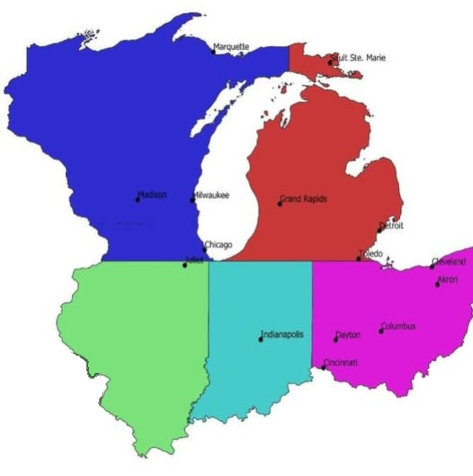 Prior to 1848, this is the map of the five free midwestern states. Notice that the northern borders of Illinois and Ohio were raised, and more of the Upper Peninsula was granted to Michigan. (Posted by Bob Blazich) |
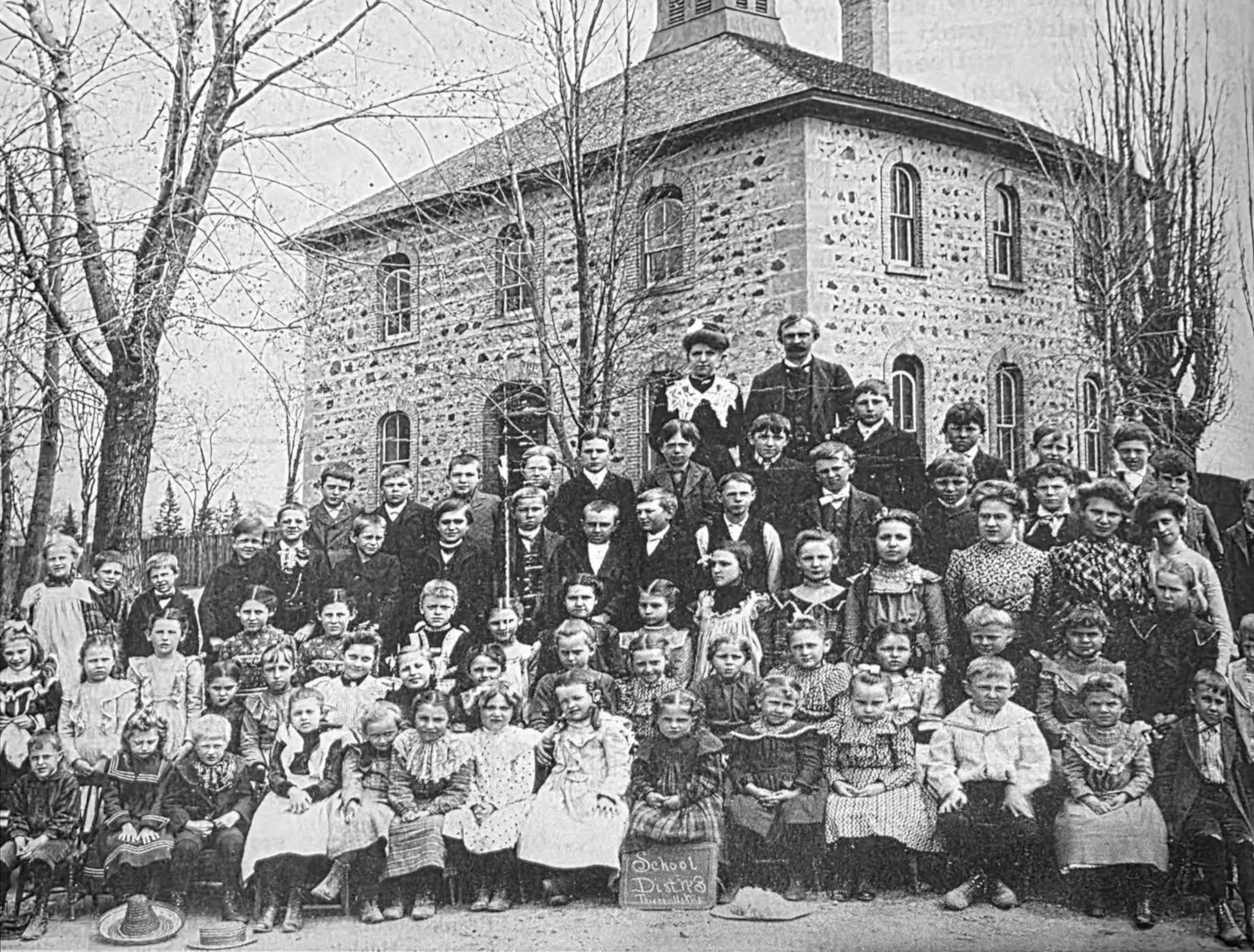 One of the 14 school houses for the original German inhabitants, Thiensville, WI. (Posted by Bob Glazich) |
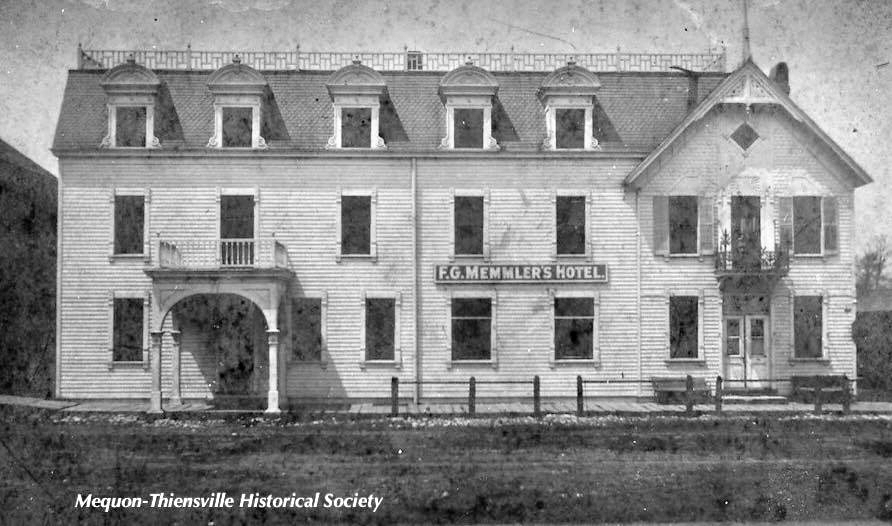 The Memmler Hotel. (Posted by Bob Blazich) |
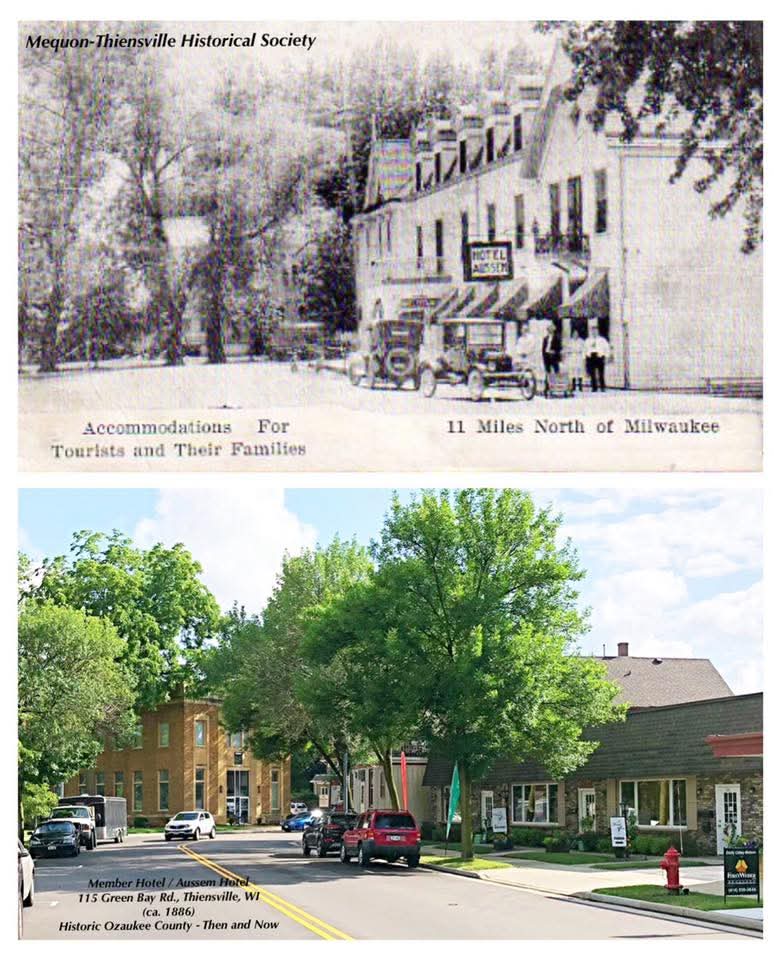 A before and after image of the Memmler Hotel, also the Aussem Hotel. (Posted by Bob Blazich) |
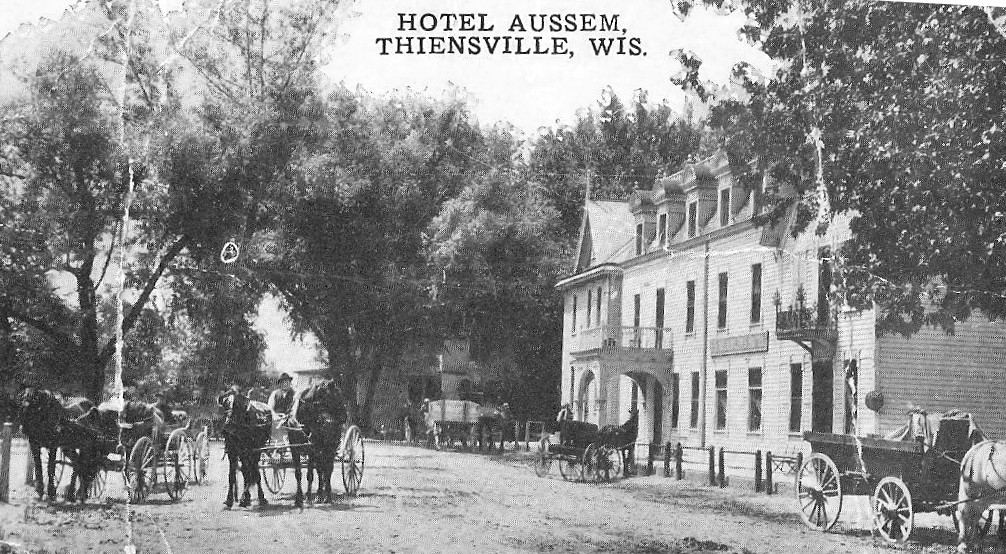 Assem Hotel on Green Bay Rd, Thiensville, WI. (Posted by Bob Blazich) |
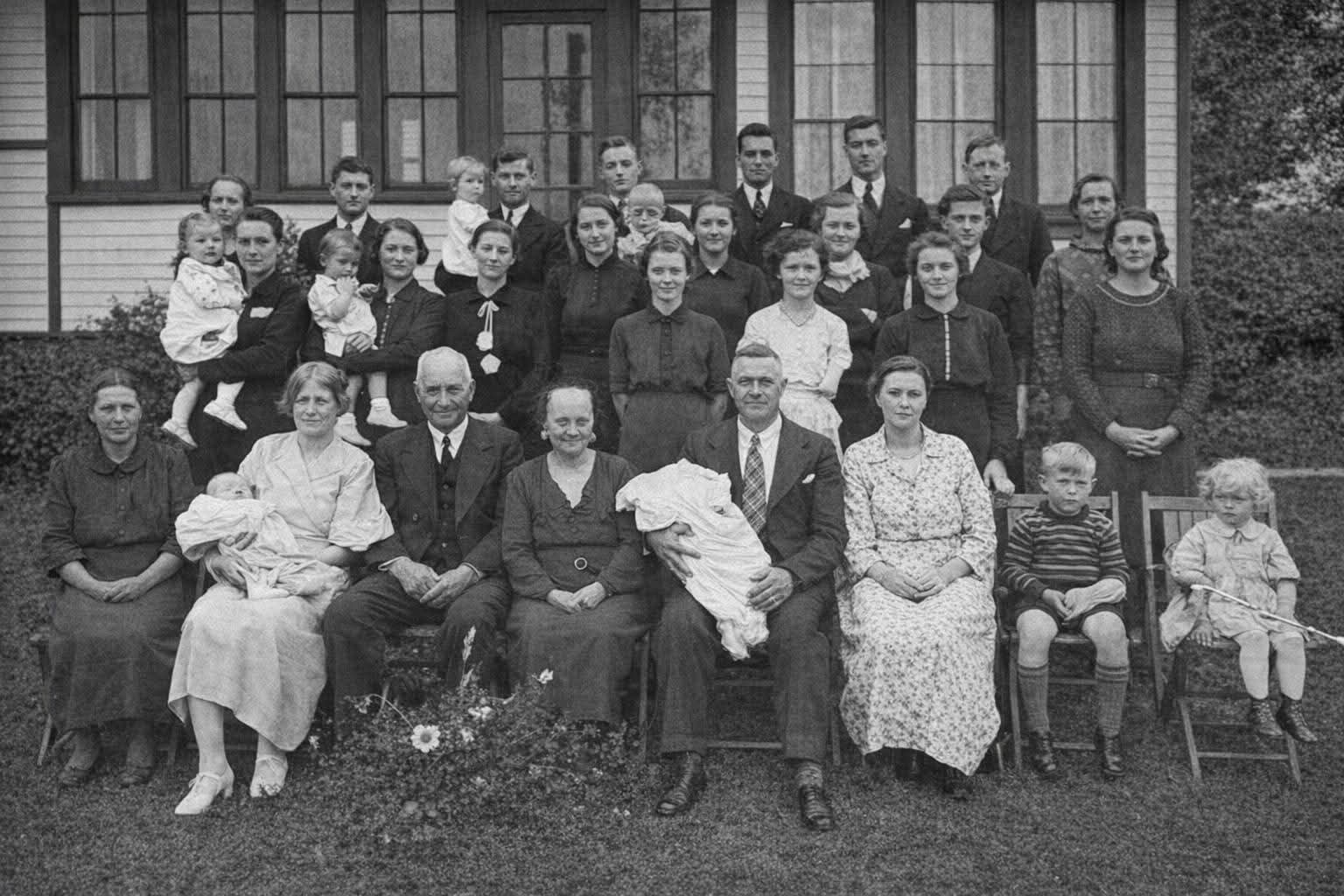 Some of the original inhabitants of Thiensville, the Kiekhaefer family, circa 1938. (Posted by Bob Blazich, sharpened using AI) |
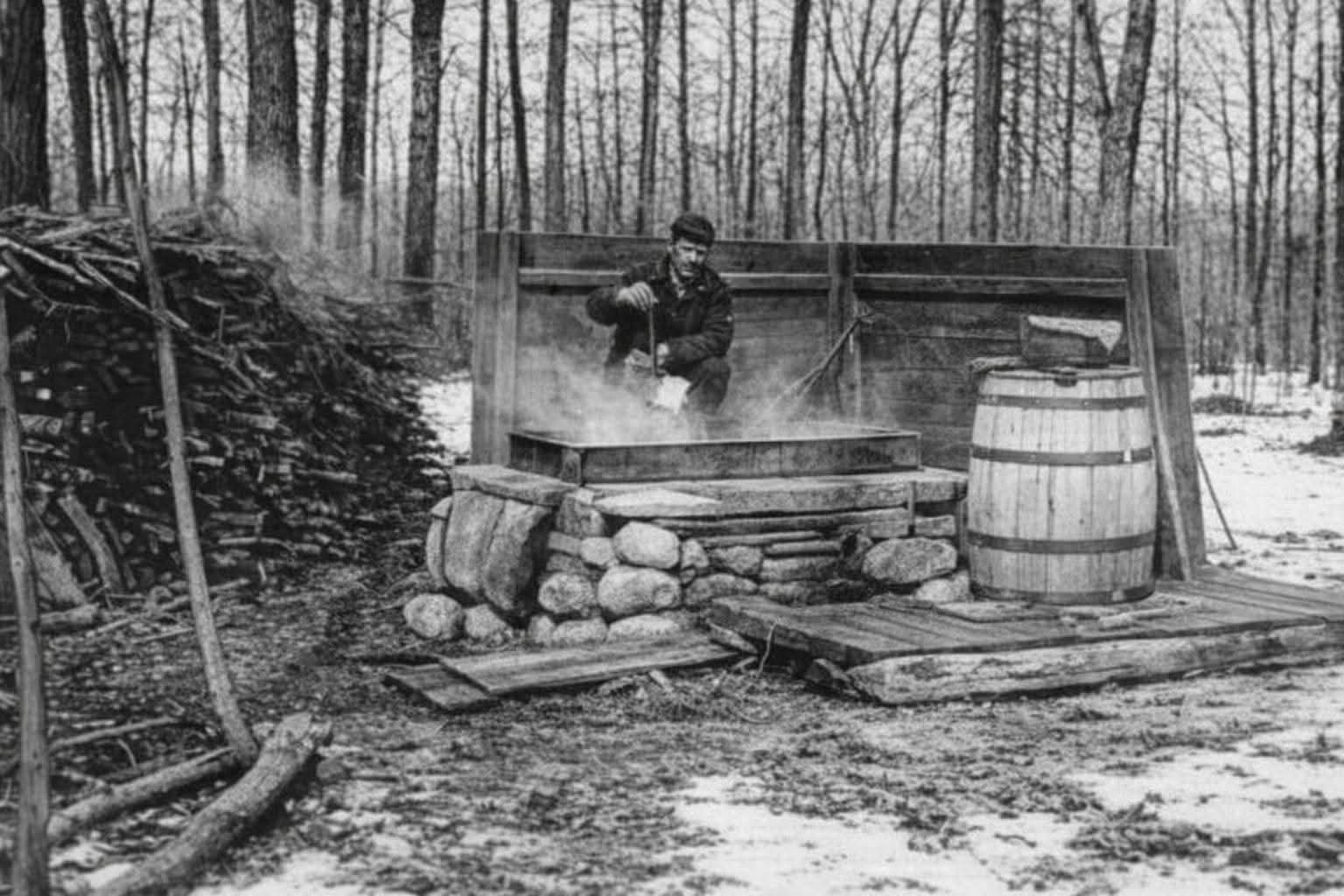 Walter Fromm boiling maple sap on Mule Hill, circa 1921. (Posted by Bob Blazich, sharpened by AI) |
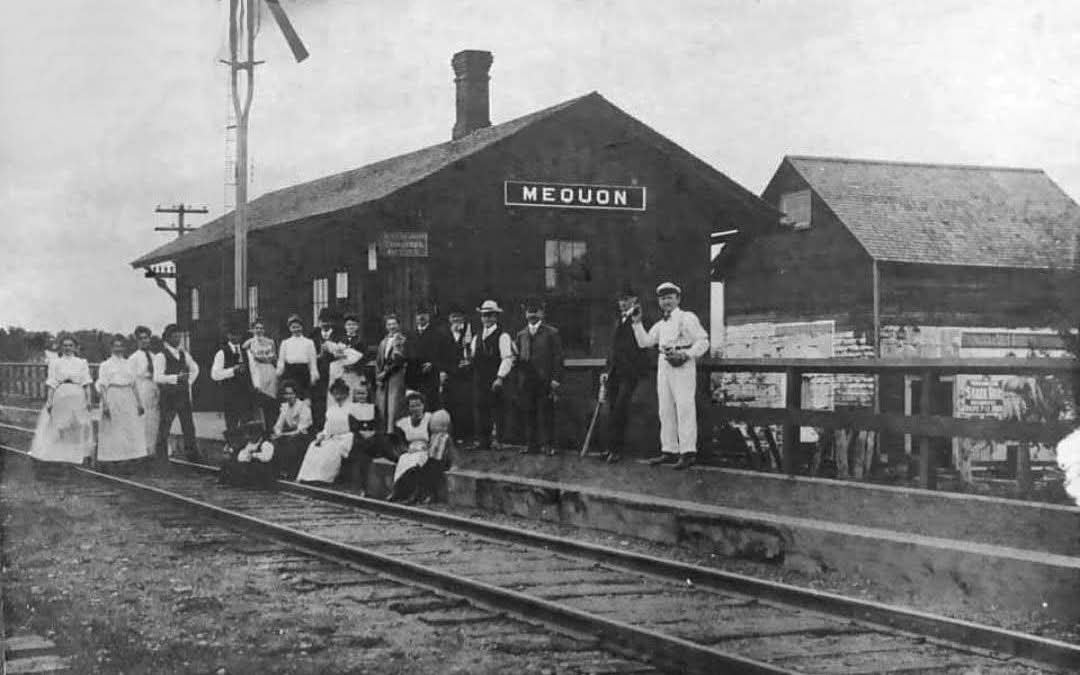 Train Station in Mequon, WI; circa late 1800s. (Posted by Bob Blazich) |
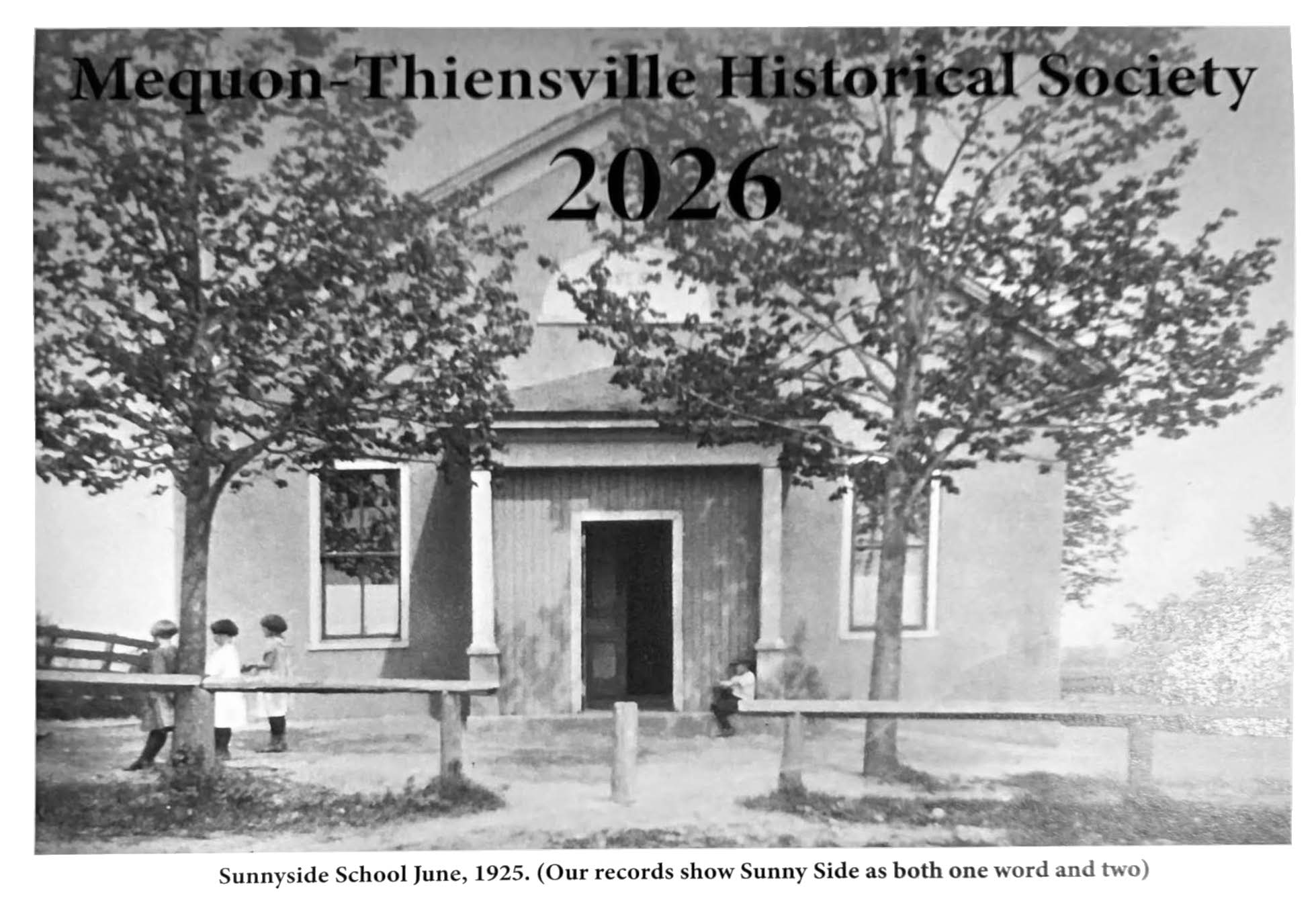 Sunnyside School, circa 1925. |
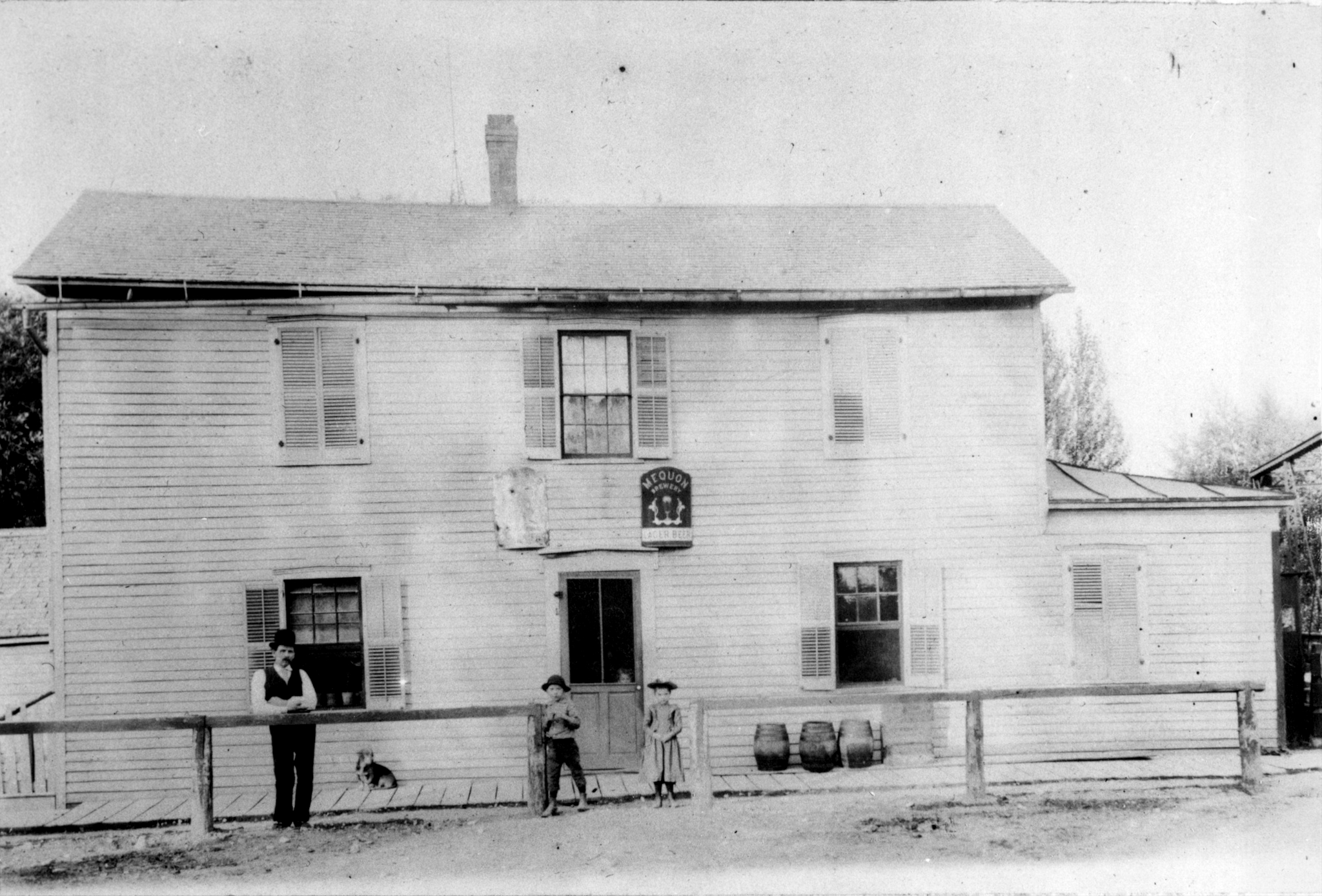 The Mequon Brewery, also called the Fox Town Brewery, circa 1800s. This underscores the German heritage of brewing beer in the Midwest. (Posted by Chris Pritzlaff Fricke) |